
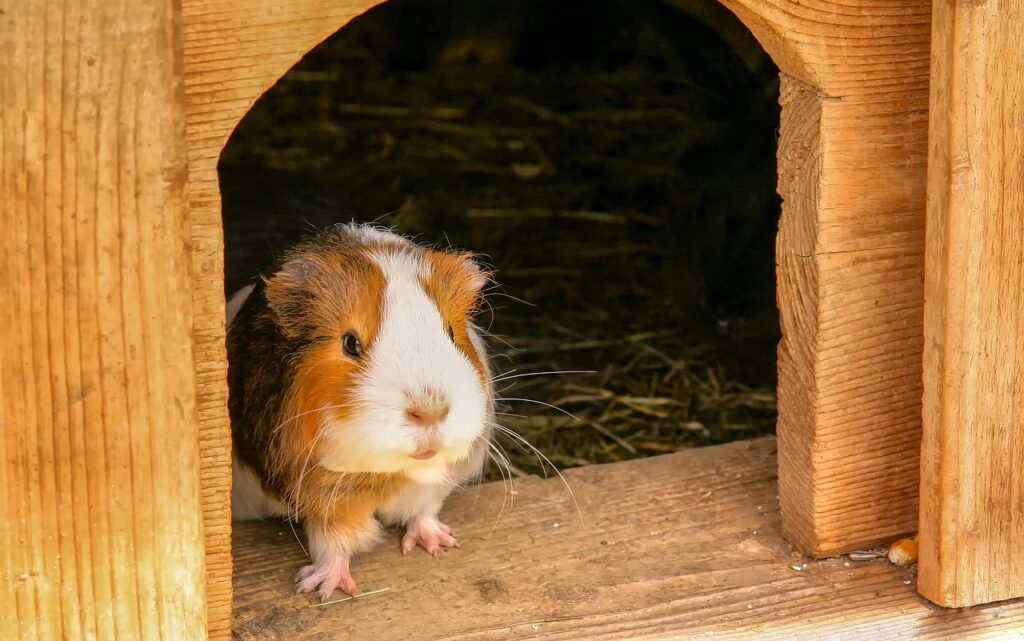
Setting up the right cage is one of the most important steps in giving your guinea pig a safe and comfortable home. For first-time owners, figuring out how to create that perfect environment can feel overwhelming. This guide will walk you through everything you need to know from choosing the right cage and ideal location to selecting bedding and toys so you can confidently create the best guinea pig cage setup for your pets. Product recommendations are included throughout.
This post contains affiliate links. I may earn a commission if you make a purchase through these links at no additional cost to you.
The most important part of a guinea pig enclosure is the size. Guinea pigs need enough space to move around. The size requirement changes depending on the number of guinea pigs you plan to house. These cages should be horizontal.
View the Table of Contents
Table of Contents
Choosing the Right Guinea Pig Cage
The most popular type of cage is the C&C guinea pig cages that can be found almost anywhere. C&C stands for “Cubes and Coroplast,” which are, indeed, their main components. These types of cages are popular within the guinea pig community for their customization options and safe structure. They can be easily expanded and fit into almost any space.
C&C cages can be bought on Amazon or other official guinea pig brands such as Kavee and GuineaDad. Regarding Amazon, I recommend the [Viscoo Metal Grid Cage] cage specifically because of its durability and included transparent panels.
Midwest guinea pig cages are another viable option. These cages are already pre-assembled, with a rectangular shape and a plastic base. While these cages may be too small for multiple guinea pigs, it is possible to expand them by combining and linking an additional cage.
The [Midwest Guinea Habitat] is the best popular ready-made option for first time owners for a reason. Unlike other pre-made cages, it is possible to expand this cage by connection two together. Two Midwest cages provide approximately 16 square feet of space.
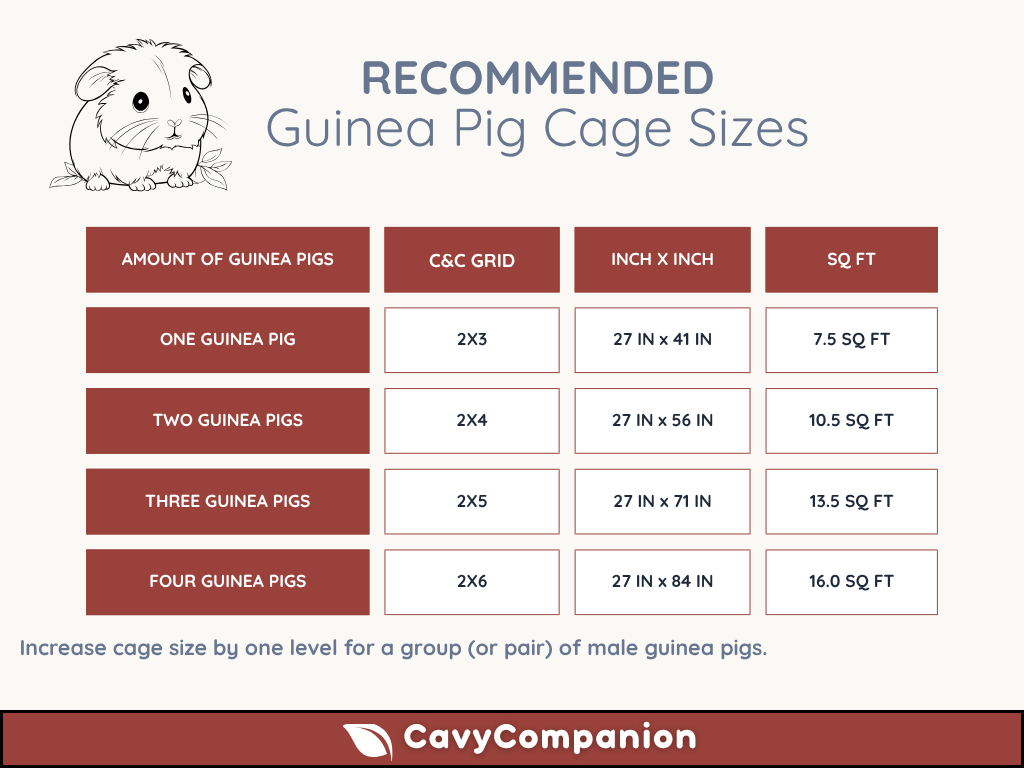
Male guinea pigs tend to be more territorial than female, so they require extra space. It is recommended to get a cage one size larger than you would for the same number of females.
Most pet store cages are not a good option for your guinea pigs. These types of cages are typically tight, small spaces that were not adequately made to suit the needs of your pet. Its size does not meet the bare minimum of space recommended for your pets and may also have other issues, such as poor ventilation and wire floors. In addition, these cages are usually more expensive than their larger and better counterparts.
TIP: The more space a Guinea pig has, the better!
The use of multi-level cages is generally not the best option for guinea pigs. Multiple cage floors aren’t really tailored for guinea pigs, BUT there is nothing wrong with creating a second floor at all. In fact, it is common to include a small ramp/loft inside C&C cages.
Having a second floor should be in addition to their primary horizontal living space, which means the second floor should be a smaller addition to their already main area. If you want a multi-level setup, make sure it is safe. Guinea pigs have poor depth perception and are particularly at risk of falling from heights. Always include a safe ramp with a more shallow slope and guard rails. If designed correctly, this setup can offer greater enrichment and space.
Avoid any multi-level cages that are vertical, contain more than two levels, and have steep ramps. As guinea pigs age, they may gradually stop using multi-level setups because their mobility decreases with age.
To learn more and compare several other guinea pig cages, browse [Best Guinea Pig Cages for Every Budget: Midwest and C&C Cages].
Setting up the Exterior of a Guinea Pig Cage
Guinea pig cages should not have a conventional “top” that you typically find with other small animal cages. It is important to have enough ventilation so they can breathe properly. Do not worry, they won’t jump out of the cage! However, it is perfectly fine (and recommended) to partially cover their cage with a blanket. Not only does this offer a small hiding space for them, but it also helps add heat should it ever be cold; and that brings us to the next point:
Guinea pigs are sensitive to temperature. They cannot tolerate extremely cold or hot temperatures. A good range should be kept within approximately 65-75°F or 18-23°C for the best results. Keep the cage away from heat sources (such as windows or a fireplace). Should it ever require it, fans are okay, but they should never be pointed directly at your piggies or their home.
Place the cage in an area you spend a good amount of time in. Guinea pigs are very sociable, and just seeing you can make them happy. This area should not have loud noises and be far away from other possible household animals that may see them as prey.
Setting up the Interior of a Guinea Pig Cage
Guinea Pig Bedding
Guinea pigs have very sensitive feet. That means they should always be on soft surfaces. Their cages should never have rough surfaces such as wire or mesh bottoms. Having these can cause serious health problems for your pets, such as bumblefoot, sores, or sprains.
Bedding is the material used to cover the bottom of a guinea pig’s cage. They not only give your pet a soft surface to walk on, but also absorb urine, feces, and help control odor. There are several types of bedding guinea pig owners use, and the most popular option is fleece. The best guinea pig cage setup also uses the best bedding. Use this guide to learn more and find the best bedding for your pets: [Best Guinea Pig Bedding: Complete Guide to Paper, Fleece & Wood Shavings].
Fleece Liners for Guinea Pigs
Fleece is a soft, comfortable, and reusable fabric that serves as a great bedding option for guinea pigs. However, it doesn’t absorb urine on its own, so it must be paired with an absorbent layer underneath. When your guinea pig urinates, the liquid passes through the fleece and is absorbed by the layer below, keeping the surface dry and comfortable.
This ‘absorbent layer’ can be old towels, pee pads, U-Haul blankets, and any other fabric that effectively soaks up moisture.
TIP: Look for 100% polyester fleece. This material is better at wicking moisture to the absorbent layer below. Other material such as cotton absorb the urine instead of letting it pass through to the bottom layer. This leaves the surface wet.
To make fleece wick properly, it needs to be washed and dried several times before first use (without fabric softener or dryer sheets). Use hot water and unscented detergent.
On the bottom of your cage, simply lay down an absorbent layer (U-Haul blankets, towels, or puppy pads). Then, put in a 100% polyester fleece of your choice on top. Bath mats can be added to “high activity” areas to soak up guinea pig mess more effectively.
Loose Bedding for Guinea Pigs
Instead of Fleece, some owners prefer the use of loose bedding such as paper or wood shavings. Loose bedding is spread across the bottom of the cage in layers to absorb waste.
This option can grow to be quite expensive as this bedding is not reusable. Once it is soiled, it needs to be discarded and replaced with a new fresh layer. However, this also offers a greater ease of cleaning compared to fleece.
Wood shavings are pieces of wood that were shaved off pieces of timber. They are an acceptable option for bedding but be careful with which shavings you select, as some can be harmful to your pig. Shavings such as cedar and untreated pine can cause health issues. Kiln-dried pine is safe when properly processed but aspen remains the safest and most recommended option. Since wood shavings are not known for their absorption, make sure you put an extra absorbent layer underneath the shavings, such as newspaper.
My top wood shaving recommendation is [Kaytee Aspen Bedding]. These shavings are soft and absorbent with excellent odor control.
Paper bedding is an absorbent and fluffy bedding made from paper pulp. This material makes it a great option for those wanting a softer surface for their pets. This bedding is often more dust-free and absorbent compared to wood shavings. It is important to get high-quality bedding that is free of any excess, such as fragrances and dyes.
[Kaytee Clean & Cozy White Paper Bedding] is a high quality paper bedding with no added chemicals or fragrances.
Best Guinea Pig Cage Setup: Essential Additions
Guinea Pig Enrichment
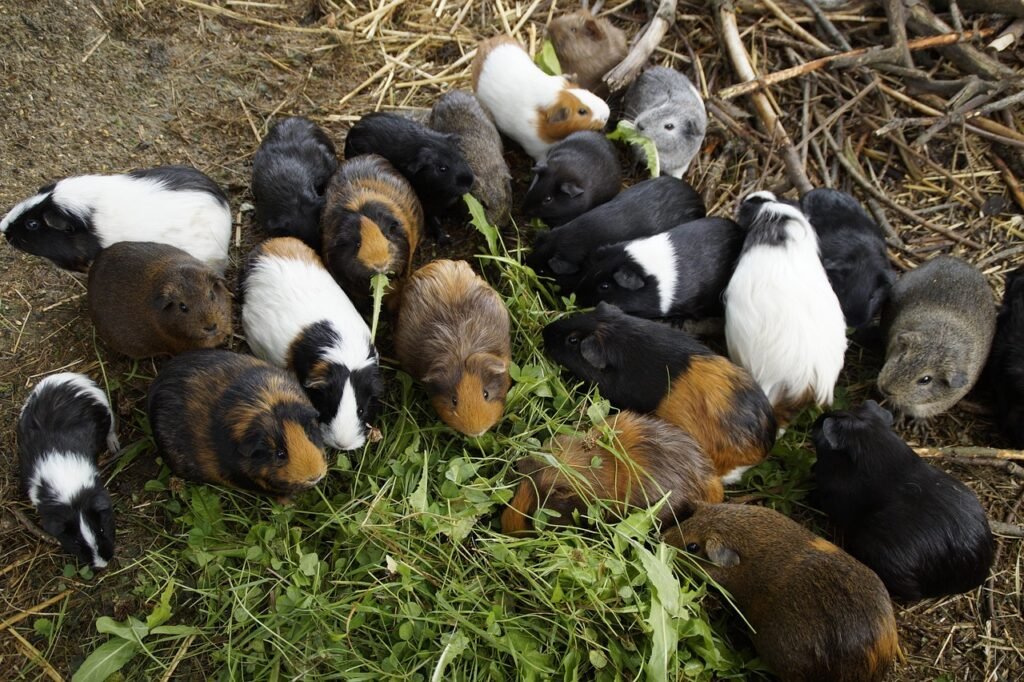
The best guinea pig cage setup has enrichment. The term ‘enrichment’ points to all the items and activities that help stimulate your guinea pig and keep their minds active. Without enough enrichment, your pets can become bored and stressed. One of the most common forms of enrichment is toys! Use this guide to learn more about enrichment: [Best Guinea Pig Toys: Enrichment, Activities & DIY Ideas].
- Chew Toys
- Hideouts & Tunnels
- Cardboard Mazes
- Wooden Sticks (Apple Wood)
- Treats
Toys can also be created! A popular but simple one involves getting a toilet paper roll and stuffing it with hay. Guinea pigs love them, it can be used as both a toy or another food source.
TIP: DO NOT give your guinea pig an exercise ball or wheel. Those toys were made for other small animals such as Hamsters and Gerbils. Guinea pigs are too big and are not flexible enough to use them. They have rigid spines that can not bend or curve! Using one can cause injuries ranging from discomfort, such as back pain, to more serious injuries that might even lead to death in some cases.
They get their exercise elsewhere, whether it be during floor time or having a large enough cage to run in.
Guinea Pig Hideouts
Guinea pigs are prey animals. That means they need space and hiding spots to feel safe and secure! Each guinea pig should have access to at least one hideout.
Hideouts are enclosed shelters or tunnels that provide a more private and cozy area that they can retreat to when needed. They can be bought or even created (DIY); simply use a box of cardboard and cut two small doors for your pig. It is better to have two entrances.
Guinea Pig Food
Hay should ALWAYS be in the cage. Not only is it their main source of food, but it also aids in their digestion and limits tooth growth. Water options such as bowls and bottles should also be available at all times.
Learn more about nutrition here: [Complete Guinea Pig Diet Guide: Hay, Pellets & Nutrition].
Common Mistakes
Plastic and Metal: Guinea pigs chew on practically everything. Ingesting large amounts of plastic may lead to a gastrointestinal blockage. Excessive chewing on metal bars can damage teeth. Watch for any jagged or sharp edges.
Chemicals: This is important especially when cleaning the cage. Be careful with household cleaning products. Use pet-safe cleaners or a diluted vinegar solution (50% Water, 50% Vinegar)
Limited Cage Space: Guinea pigs require a flat horizontal space to roam. Refer to the cage dimensions graphic
Toys: Avoid any toys with bells, rubber, or plastic parts. Some can pose a choking hazard.
Buying Pet Store Cages: Most pet store cages are far too small for guinea pigs and often more expensive than better alternatives like C&C or Midwest cages. Always check the dimensions before purchasing.
Conclusion
Now that you’ve learned the basics of creating the best guinea pig cage setup, your guinea pigs have the perfect place to live in. Setting up their cage is the first step to the happiness of your guinea pigs! Continue your journey by learning how to clean and care for their space in our next guide [How Often to Clean a Guinea Pig Cage (Complete Schedule & Guide)] and bond with your guinea pigs [Complete Guide: How to Get Your Guinea Pig to Trust You]!