
If you’re considering adopting guinea pigs, one of the first questions you’ll face is whether to choose a male or female guinea pig. While both genders make wonderful pets, there are important differences in health and care requirements that can help you decide which is the better fit for you.
Of course, neither male nor female guinea pigs are inherently better but owners may prefer one over the other. That is completely normal. Both male guinea pigs (also known as boars) and female guinea pigs (sows) have their own unique characteristics. Males tend to be larger and more territorial, requiring extra space and attention to their grease glands. Females are generally calmer and easier to bond, but face different health risks related to their reproductive system.
Now that is just the general trend. It is entirely possible for a male guinea pig to be calmer and a female to be more aggressive. The personality of your pets can vary with little link to their gender.
This guide breaks down everything you need to know about male and female guinea pigs. This includes their size difference, recommended cage sizes, and health concerns. All so you can make the best choice for your situation.
View the Table of Contents
Table of Contents
Male Guinea Pigs: Size, Behavior & Care
Size and Territorial Behavior
Male guinea pigs are larger than their female counterparts. On average they can weigh between 900g to 1,200g while females only range from 700g and 1,100g. This weight can vary based on the guinea pig’s breed.
With this size also comes more dominant behavior. Male guinea pigs are territorial. They are defensive of their own space and claimed areas and/or items. This also means they need a larger space. A pair of male guinea pigs need enough space from other guinea pigs to have their own ‘personal zones.’
It is a way to stop them from fighting each other over these claimed areas. While providing two of everything is common practice for any pair (female-to-female or female-to-male), this is especially true if you plan to bond two males with each other.
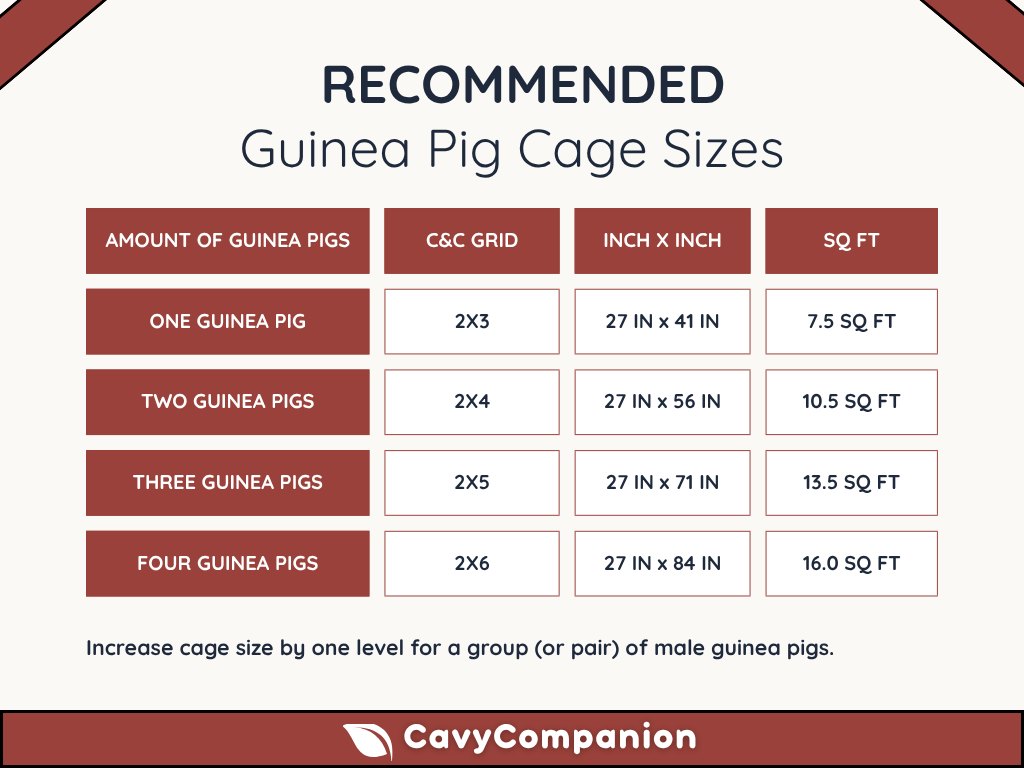
Males are more likely to show territorial aggression. That is why a pair (or even group) of males need a large cage than the standard.
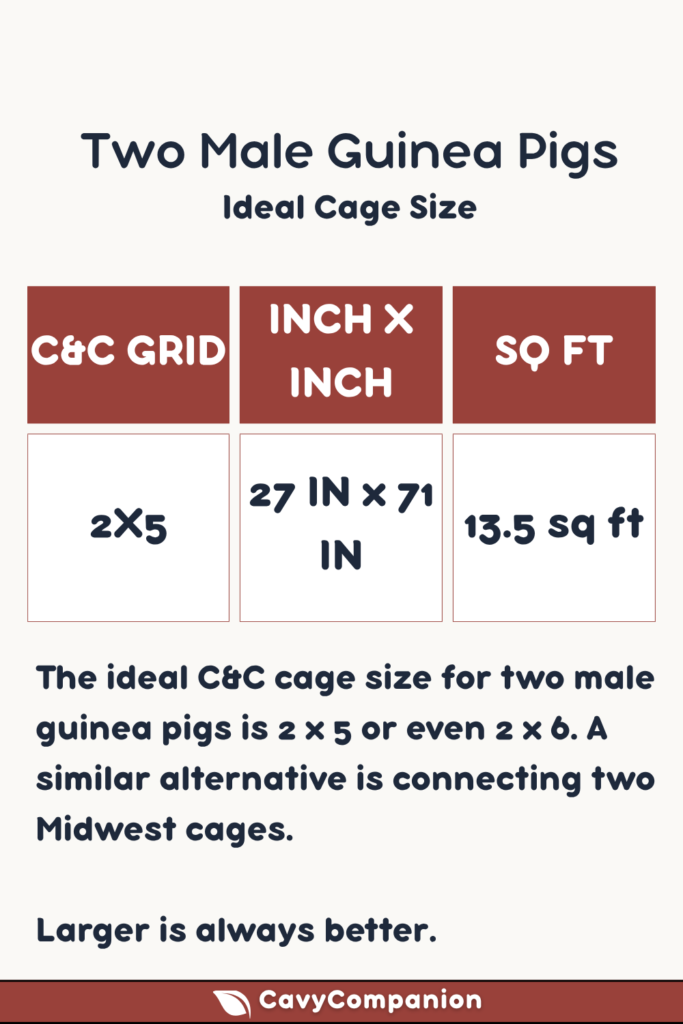
A larger cage lowers fighting. It is very important even if the two males are in a stable bond.
Even with a stable bond, a bond can break if the cage is too small. There is a higher risk of this happening with male pairs as being confined in a small area means they cannot escape each other during disputes. This can turn minor disagreements into severe fighting and territorial aggression.
It is important to note that ALL guinea pigs require a large cage regardless of gender. Males simply require additional space on top of the already recommended minimum.
Scent Marking & Odor Management
Male guinea pigs are highly territorial and therefore produce a much stronger odor than females to scent their territory. This is a practice known as scent marking.
All guinea pigs have something called a grease gland that is located on their backside. The guinea pig drags this gland across the ground to ‘mark’ their territory. This creates a musky, almost “fishy” scent. Males in particular have a very active grease gland and produce a much stronger scent.
Male Guinea Pig Health Risks
The grease gland of a male guinea pig can build up very quickly. You must regularly check for buildup and clean that area to avoid irritation or infection. This is not an issue with most females since their grease glands are typically less active compared to a males. However, there are a few l exceptions where a female can have an exceptionally active grease gland and require cleaning as well.
To learn how to clean a grease gland refer to this video by carliescavies: [Cleaning Guinea Pig Grease Glands].
In addition, males are at risk of developing fecal impaction and testicular cancer. The good news is that these risks can be lowered through a surgical procedure known as neutering.
Benefits of Neutering Male Guinea Pigs
Neutering eliminates the risk of testicular cancer entirely. Once a guinea pig’s testes are removed, there’s no remaining tissue that can develop tumors or cancerous growths.
Neutering also reduces the risk of fecal impaction, a condition where feces becomes trapped and accumulates in the anal sac. This is common in older unneutered males and can accumulate over time and develop a strong and unpleasant odor, as well as possible irritation or infection.
To see if neutering your guinea pig is a viable option for you, check this guide: [Spaying and Neutering Guinea Pigs: Complete Guide to Safety & Recovery].
Neutering does not remove every health risk associated with male guinea pigs. Bladder stones (also known as urinary stones) happens when calcium crystalizes in the bladder. Males are more prone to this condition because they have a narrow narrower urethra.
Female Guinea Pigs: Personality & Health
Behavior and Bonding
Female guinea pigs generally display much less dominance behaviors than males.
Female guinea pigs also display dominance behaviors such as mounting, chasing and rumblestrutting (especially during heat cycles). However these behaviors are generally less intense and less frequent than males.
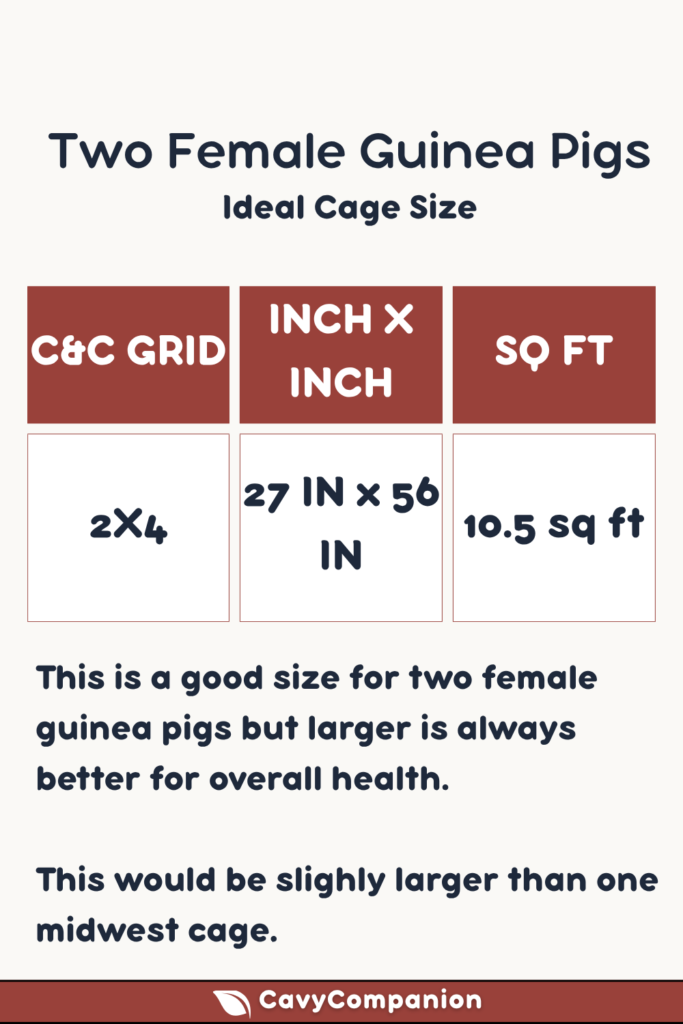
All guinea pig regardless of gender need enough space to run around and explore. That is how they stay active and physically (and emotionally) healthy.
A small cage can still lead to territorial disputes even amongst females (although it is less likely compared to males). A cage should always feel large enough that it does not appear crowded.
Lower Maintenance and Cleanliness
A female guinea pig’s grease gland is far less active than males, meaning odor and scent marking is rarely a concern. Overall cage maintenance tends to be slightly easier with females.
Females are generally a popular choice for first time guinea pig owners for these reasons, though both genders make equally rewarding pets with the right care.
Female Guinea Pig Health Issues
The biggest difference between male and female guinea pigs are that females are at risk of pregnancy complications. Guinea pig pregnancy is very dangerous compared to other animals. Pregnancy is natural but in guinea pigs there is a high likelihood of the female experiencing complications.
If a female has never given birth before the age of 6-8 months her pelvic bones will begin to fuse together permanently. Any babies born afterwards will not be able to smoothly pass through these fused pelvic bones. This causes a condition known as dystocia, or difficult labor.
That is why housing them with unneutered males is strongly discouraged.
Benefits of Spaying Female Guinea Pigs
A spayed female guinea pig cannot get pregnant. However when housing a female with a male it is generally recommended to neuter the male rather than spay the female. This is because spaying is a significantly more invasive and higher risk procedure than neutering.
On the other hand, there are many benefits to spaying a female guinea pig. Spaying is the only way to completely prevent conditions such as uterine and ovarian cancers as well as ovarian cysts. To see what works best check this guide: [Spaying and Neutering Guinea Pigs: Complete Guide to Safety & Recovery].
Understanding Heat Cycles in Female Guinea Pigs
Female guinea pigs have estrous cycles, also known as “heat.” This occurs every 2 to 3 weeks. When this happens they may show behavioral changes like agitation or mounting. This is completely normal and no intervention is needed unless it triggers fighting.
Females usually enter their first heat between 4 and 6 weeks of age.
Unlike other animals, female guinea pigs do not have periods. They do not bleed during their heat cycle. Any signs of bleeding may indicate a health issue.
Housing Male and Female Guinea Pigs Together
If you plan on having both a male and female guinea pig, it is highly recommended to neuter the male to prevent any pregnancies. Aside from that, this type of pairing works well.
Ensure your male is neutered by an experienced exotic vet BEFORE introducing them. Your vet will give you a “waiting period” before you can allow contact between the male and female guinea pig. Even after a neutering process, your male may still have remaining sperm sufficient enough to impregnate your female.
When housing a male and female together, you can follow the standard cage size (same as a female pair). Unlike two males together, a male-female pairing does not typically require extra space for territorial reasons as long as the male is neutered. That said, bigger is always better for any pairing.
How to Tell a Male and Female Guinea Pig Apart
The best way to tell if a guinea pig is male or female is by examining the genital area.
Male guinea pigs have large sacs that hang behind their rear legs. You can usually see them whenever your guinea pig walks or stand still. If you can’t however, you will need a closer look at the genitals.
Gently pick up your guinea pig. Be sure to support their body fully by cradling them under the chest and hind legs.
Male guinea pigs have an “i” shape in the genital area. If you apply light pressure to the abdomen (just slightly above the genital area), the penis will protrude.
Females a “Y” shaped triangular opening. There is no penis or testicles.
If you are having trouble telling the differences, you can check this visual guide [Sexing Guinea Pigs] by RSPCA. It has several photos of the genital area of both male and female guinea pigs and walks you through how to properly identify a guinea pig’s gender.
Quick Comparison
There’s no single “better” gender when it comes to guinea pigs, both make excellent pets. Whichever you choose, remember that guinea pigs are social animals and should always be kept in at least a pair.
| Factor | Male Guinea Pig | Female Guinea Pig |
| Size | Larger (900 – 1200g) | Smaller (700-1100g) |
| Temperament | More territorial & dominant | Calmer, easier to bond |
| Cage Space | Require larger cages | Standard cage size acceptable |
| Odor | Stronger (scent marking) | Minimal odor |
| Health Risks | Testicular cancer, impaction, urinary stones | Ovarian cysts, pregnancy complications |
| Neutering/Spaying | Lower risk procedure | Higher risk & more invasive |
Monitor them closely during the bonding process. To learn how to properly bond guinea pigs, check out the complete bonding guide: [How to Bond Guinea Pigs: Complete Guide to Successful Pairings].