Guinea pig poop is often one of the very first signs that something may be wrong. It can be odd, yes, but understanding the types and variations of your guinea pig’s poop is very important to understanding their health.
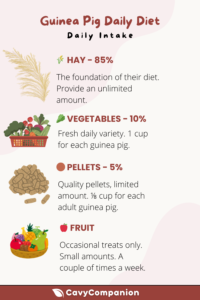
On average, a healthy guinea pig can poop 100 times a day. This number can increase or decrease based on other factors such as age or weight- but they all reflect your pet’s diet. That is why changes in poop are most likely linked to what you are feeding your guinea pig. Consider if you have recently changed your guinea pig’s diet or introduced a new food item.
You can refer to my complete diet guide here to learn about the proper guinea pig intake: [Guinea Pig Diet: What Can Guinea Pigs Eat?].
In this guide, we will understand the meanings of different types of poop and what to do once these signs appear.
This is NOT a replacement for a veterinarian’s advice. Remember to always consult with a veterinarian regarding the health of your pet.
View the Table of Contents
Table of Contents
Normal Guinea Pig Poop
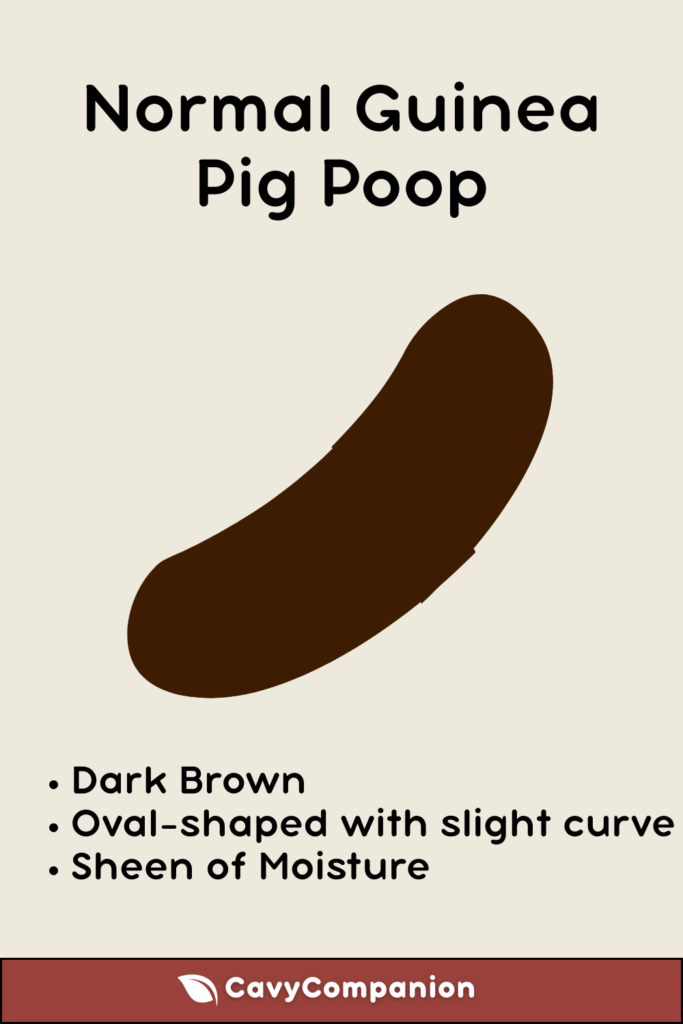
Normal guinea pig poop is dark brown with a firm oval shape. It is almost ‘plump’ with a smooth texture and no missing pieces or crumbling in between.
Guinea pig poop is firm, that means it is not soft enough to easily squish or flatten, or rock hard (unless it is really old poop that was left out).
This type of poop has little to no smell.
If you were to pick up this poop, it will remain solid and not fall apart. It would hold its shape. It would not leave a smudge on your fingertips even if it was fresh.
These are a good sign! All the poops you find should have around the same consistency and size.
Any changes in texture, shape, color, size, and smell are abnormal. In some scenarios immediate veterinary attention is highly recommended.
Guinea Pig Poop: Changes in Texture
All of these poop have abnormal texture; either being too soft or hard. These are commonly related to issues with hydration and diet.
Soft & Mushy Guinea Pig Poop
These types of poop may look normal when it comes out but are abnormally soft when touched. With the slightest pressure, you can easily squish and/or flatten it.
Then there is soft mushy poop. Which is even wetter and misshapen. These types of poop come out abnormal with a watery and paddy appearence. You may find it sticking to your guinea pig’s fur.
Soft and mushy poop is commonly accompanied by a foul smell.
Both of these are usually the result of dietary imbalances, such as too many watery veggies and not enough hay.
You can test if your guinea pig’s poop is too wet by placing it on a paper towel. Check for any smudges or wet areas left behind.
Depending how ‘wet’ the poop is, it can indicate a more severe issue that could lead to it developing into diarrhea. Guinea pig diarrhea is primarily liquid, although there may still be ‘wet chunks’ of poop scattered throughout. Diarrhea is a very serious issue in guinea pigs. I got more in-depth below.
Hard Guinea Pig Poop
Now when I say hard poop I mean fresh poop that comes out unnaturally hard. If you leave any poop out long enough it will dry and harden.
Hard guinea pig poop are typically smaller in size. If it is accompanied by other symptoms it may also indicate fecal impaction or constipation. See if your guinea pig is not pooping as often or struggling to poop.
Naturally hard guinea pig poop may be the result of dehydration or the lack of hay. Make sure to feed hydrating vegetables like cucumber or celery.
Guinea Pig Poop: Changes in Shape
Anything that is not a round oval shape is misshapen. Irregular guinea pig poop is often the result of underlying health issues in the gut or diet.
Gut stasis occurs when the digestive system slows down or stops moving entirely. Unlike larger animals, guinea pigs have a continuously active digestive system that relies on a constant flow of hay and fiber to keep things moving. When this slows down it can quickly become life threatening. Signs include reduced or no poop output, loss of appetite, lethargy and a hunched posture. This is a veterinary emergency.
Tear-Drop Guinea Pig Poop
Poop shaped like a teardrop. It is round on one end but pointy on the other. Tear dropped poop is typically smaller than normal guinea pig poop.
These shaped droppings may indicate an issue with the gut. An problem typically caused by stress or overall diet. Make sure they are taking in enough hay, as it is the most important factor that supports your pet’s gut health. Hay should always take up the majority of your pet’s daily diet.
Monitor their water intake as well. Dehydration may also lead to tear shaped poop.
Now it is also possible for stress to impact your guinea pig’s digestion. See if there has been any potential stressor such as a new environments or cage mate.
Linked Guinea Pig Poop
This type of poop is ‘linked.’ It looks like a chain of poop that are connected together by small strands and clumps of poop. Think of a sausage link.
Linked guinea pig poop is commonly associated with gut health. Make sure your guinea pig is getting enough hay and water.
Broken In Half
This happens when your guinea pig’s poop looks ‘broken,’ like someone went and cut it in half.
Broken poop can indicate discomfort or digestive issues. Check for signs of dehydration and ensure unlimited hay access.
Guinea Pig Poop: Changes in Size
Normal guinea pig poop is 1-2 cm long but different guinea pigs can have slightly different “normal” sizes. As your guinea pig ages their poops tend to grow smaller. That is completely normal.
These changes in size refers to abnormal differences based on the average size of your guinea pigs.
Large Guinea Pig Poop (Clumped Poop)
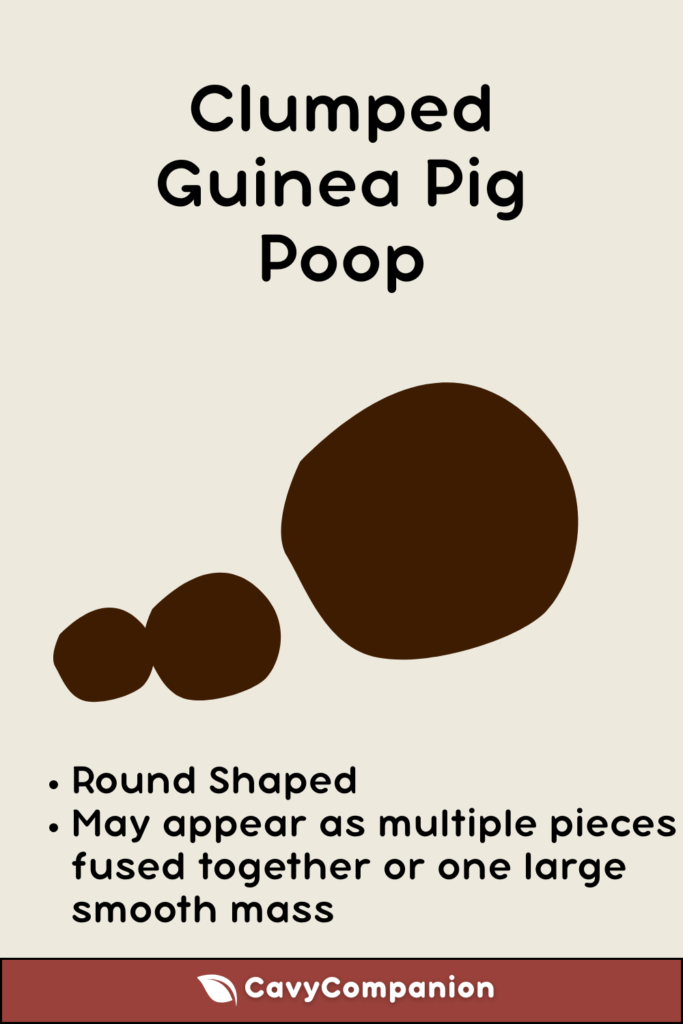
Clumped guinea pig poop is very round. It may have lost its original oval shape and looks more like a circle. This clumpy mass may appear as if several pieces of poop are stuck together or as one large but smooth piece.
It is noticeably larger than regular droppings and can also be sticky and/or soft.
This is a common sign of fecal impaction.
Guinea pig fecal impaction is more common in older male guinea pigs. As they age, the anal muscle weakens and it becomes difficult to release poop. This causes feces to build up and ‘clump’ together.
Aside from fecal impaction, larger poop can also be related to imbalances in the diet. Always ensure unlimited access to Timothy hay and water.
Small Guinea Pig Poop
Smaller guinea pig poop is normal in older guinea pig but sudden changes may indicate that your guinea pig is not eating as much as usual.
Guinea Pig Poop: Changes in Color
Normal guinea pig poop is dark brown. Any variation to this color is abnormal.
Green Guinea Pig Poop
Guinea pigs naturally produce a unique poop known as “Cecotropes.” They are soft, greenish pellets that look like a cluster of grapes. Your guinea pig eats them. Directly from the anus. While it may seem disgusting, these types of poop are nutrient-rich and are eaten to re-ingest these essential nutrients.
They are completely normal.
However, if it looks like a normal poop but just happens to appear green, that is most likely not a Cecotrope but the result of overfeeding leafy greens, fresh grass, or watery veggies.
Very Light Brown Guinea Pig Poop
Often indicates dehydration or a lack of hay.
Bloody Guinea Pig Poop
Anything related to blood is an emergency. This could mean finding blood in your guinea pig’s poop or seeing your pet bleeding while they poop. Regardless these require immediate veterinary attention.
In most cases these are related to health conditions such as infections or bladder stones that could quickly worsen in a short amount of time.
But it is also important to consider if you are feeding your guinea pig’s beetroots. Beet’s have a red pigment that are known to stain guinea pig droppings if overfed. Their poop takes on a faint red taint and even pee turns pinkish. That is completely normal and although it looks alarming, it is also usually harmless.
It may be hard to differentiate but bloody poop is usually very red compared to the ‘tint’ from beetroots. If you are unsure contact your vet.
Guinea Pig Diarrhea
Any form of diarrhea in guinea pigs is a medical emergency. Once a guinea pig starts experiencing diarrhea they lose an excess amounts of fluids and become dehydrated in a short period of time. This can become fatal.
Diarrhea can kill a guinea pig within 24-48 hours.
Bacteria builds up within the system and is capable of producing a toxin and/or infection that causes severe damage to the gut.
Guinea pig diarrhea is an ‘extreme’ form of wet poop. It is very watery and foul. You may notice other signs in your guinea pig like a loss of appetite or lethargy.
Guinea Pig Fecal Impaction
Guinea pig fecal impaction happens when a solid mass of poop blocks the anus. This stool can harden and become stuck. When this happens, the guinea pig will struggle to release it and this ‘blockage’ will continue to grow larger as the other poop sticks together as they have no where else to go. This is clumped poop.
Fecal Impaction is a chronic condition that mostly appears in older male guinea pigs (around ages 2-3). It is usually manageable but requires more care.
In some cases the guinea pig may be able to free this impaction on their own but in most cases this is an emergency. Contact your vet the moment you suspect fecal impaction.
- Guinea Pig has stopped pooping and/or eating
- You can visibly see a blockage in the anus
- Your Guinea pig appears to struggle when pooping. This can be accompanied by straining or vocal cries.
Fecal Impaction can also lead to diarrhea as the liquid passes through the solid obstruction.
Guinea Pig Constipation
Constipation can be confused with fecal impaction. They have similar symptoms but constipation is not a chronic condition. It is usually caused by low hay intake and dehydration. Make sure to contact a vet for specialized care.
Pain During Defecation and Urination
Any sign of pain is not normal. These are tell-tale signs of a health condition and it is best to contact a vet immediately for advice.
The same goes with eating. It is common for guinea pigs to stop eating if they are experiencing abdominal pain. A guinea pig not eating is a medical emergency. Contact your vet.
Conclusion
In the end, guinea pig poop is linked with diet. It is always best to stick with the standard diet and do your best to avoid sudden diet changes. If you plan on introducing or replacing a food item, do so slowly over the span of days. It gives their gut enough time to adjust to their new diet.
If you are looking for a more visual breakdown of your guinea pig’s poop, you can see this brilliant video by Small Pet Select: [All About Guinea Pig Poop]. It goes over several types of guinea pig poop and shows actual poop for comparison. Highly recommended if you want to see exactly what to look for
I do want to repeat that this is a general guide and is simply here to offer insight. It does not take the place of a one-on-one visit with your vet. For any concerns reach out to a vet.
Frequently Asked Questions (FAQ)
It is normal behavior for a guinea pig’s eat their poop. They produce a special type of poop called cecotropes that looks like a grape but contains essential nutrients that benefits your guinea pig. However, it is rare to see this as guinea pigs eat this “directly from the source.”
Guinea pigs can also eat normal poop. It can be their own or their cage mates. This is generally not a cause for concern.
Guinea pigs typically poop around 100 times per day. They poop everywhere. They poop while eating, running, hiding, resting- anywhere they can! Guinea pigs poop a lot.
Treatment depends entirely on the cause and severity. Your vet may prescribe fluids to help with the resulting dehydration, probiotics to restore gut bacteria or antibiotics if a bacterial infection is present. Never attempt to treat diarrhea at home. Always contact a vet immediately.
This is rare but can point to a parasitic infection. Bring your guinea pig to a vet for diagnosis and treatment.