
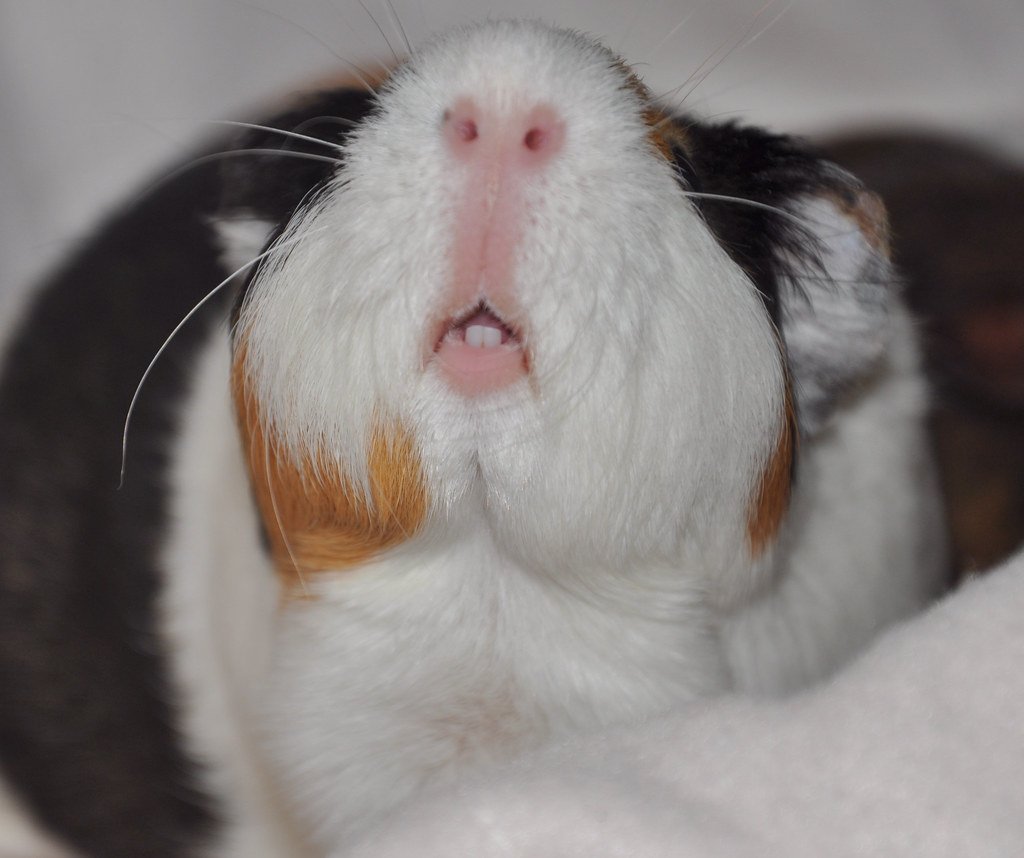
Guinea pigs are calm animals but they can show aggression. This aggression is typically reserved for each other but it can very very rarely extend towards humans. And even then, a guinea pigs bite is not normally because of aggression. As prey animals, any bite is typically a last resort they use to protect themselves. Before that, the very first instinct is to freeze or flee when encountering a potential threat. So in scenarios where your pet begins to feel cornered with neither option available, you may very well receive a guinea pig bite.
So do guinea pigs bite? Yes, but it is far less common than most people assume and almost always happens for a specific reason. But before that, we must differentiate between an affectionate and sharp bite.
Guinea pigs can ‘affectionately’ bite their humans. This is actually a very good sign that they trust you. These types of bites are almost like nibbles or faint touches. It does not break the skin or hurt at all.
Then there is a sharp bite. Now, a guinea pig would not take time and methodically plan to bite with the intent to harm. Most sharper bites that break the skin are unintentional or done in a moment of fear. These types of bites are not as common, but it is possible in a few scenarios.
View the Table of Contents
Table of Contents
Why Do Guinea Pigs Bite?
This section will go over the most common reasons why a guinea pig may bite you. Keep in mind that biting is almost always a response to something. This can be fear, discomfort or simply curiosity. Rarely is it ever unprovoked.
Understanding why your guinea pig bites is the first step to preventing it
Fear and Stress
The most common reason a guinea pig may bite is because of fear. The moment a guinea pig starts to feel cornered, they may resort to biting as a last defense. A warning to back off.
These scenarios are more common than you think, especially when you attempt to handle a guinea pig. Doing things like ‘chasing’ your guinea pig with your hand or forcefully picking them up with improper handling are all ways to receive a fear-based bite.
Boredom
Sometimes a guinea pig can bite as a way to keep themselves stimulated. In other words, they are bored. Now usually they wouldn’t bite you but rather the items around them. This includes anything they can touch like cage bars. This behavior is known as bar biting and is one of the most common signs of a bored or understimulated guinea pig. If you notice your guinea pig chewing on cage bars frequently consider adding more enrichment to their environment or upgrading to a larger cage.
Guinea pigs may also bite objects to wear down their continuously growing teeth. This is normal. Make sure to give them enough hay and chew toys.
Curiosity
Guinea pigs are naturally curious animals and may use their mouths to ‘explore’ their surroundings. Biting on items helps them understand the texture and taste of anything new around them. This can be anything within reach, including your fingers. These types of bites are usually light and cause no harm.
This is simply their way of exploring the world.
Accidental Bites
It is also possible for guinea pigs to accidently bite you. Normally, a guinea pig is able to differentiate your fingers from food. For example, if you were to hand feed them a small piece of vegetable, your pet will carefully take a small bite to avoid your finger tips.
But in some cases a guinea pig can mistake your fingers as the food itself. Guinea pigs have a keen sense of smell. If your fingers carry the scent of food they like the smell of, they may instinctively go for a bite.
Always wash your hands before and after handling your guinea pig to reduce accidental bites.
Pain or Illness
One of the major reasons behind a guinea pig bite is also one most owners do not know. It can be a warning sign of an illness. Any sudden shift in behavior is an indicator that something may be wrong.
If a usually friendly guinea pig is suddenly aggressive, that is not normal. In some cases, that can be their way of protecting themselves from being touched due to pain. They may begin biting or lunging when they feel vulnerable.
To learn how to recognize all the warning signs of a sick guinea pig, check my guide here: [Sick Guinea Pig: Warning Signs & When to See a Vet].
Display of Affection: When Biting is a Good Sign
Guinea pigs may show affection in the form of gentle nibbling or licking. This is a grooming behavior guinea pigs do to themselves and each other as a way of strengthening social bonds and trust. Once a guinea pig has truly started to trust you, they will extend this grooming to their human.
This is a very good sign that your pet is comfortable with you. These types of nibbling is painless and will not break the skin or cause any discomfort.
What to Do When a Guinea Pig Bites You
If a guinea pig bites you, stay calm and do not pull away suddenly, this can startle your guinea pig further and cause a deeper bite. Gently set them down in their cage and wash the wound immediately with soap and water. Most guinea pig bites are minor and heal quickly, but if the bite breaks the skin monitor it for signs of infection over the next few days.
Do Guinea Pig Bites Hurt?
A guinea pig bite can hurt but it depends on the type of bite. Affectionate nibbles feel like a light pinch at most and cause no real discomfort. However a fear or stress based bite can definitely cause pain. Guinea pig teeth may seem small but are much stronger than you would expect.
Side Note: My guinea pig once bit me right in between the web of my fingers. It drew blood and throbbed for a while after but soon healed quickly.
A hard enough bite in the wrong area can cause a wound to bleed. If a guinea pig bite draws blood make sure to wash the wound with soap and water immediately. While serious infections caused by a guinea pig bite are rare, it is still possible. A guinea pig’s saliva contains bacteria that can enter the body through a puncture wound. Make sure to monitor for any signs of infections or swelling.
How to Prevent Guinea Pig Bites
The best way to prevent a guinea pig bite is to learn how to handle a guinea pig. Improper handling or making your pet feel cornered is the most common reason behind guinea pig bites.
Always approach your guinea pig slowly from a distance where they can see you. Never from above or behind. Allow them to sniff your hand first before attempting to pick them up.
When picking up your guinea pig place one hand under their chest and the other supporting their hind legs and bottom. Guinea pigs feel most secure when their entire body is supported and they cannot fall.
To learn how to properly approach and handle a guinea pig refer to this guide: [How to Get Your Guinea Pig to Trust You]. It walks you through each step to building a relationship with your pet and how to earn their trust. The more comfortable your guinea pig becomes with handling the less likely they are to bite. Building this trust takes time and patience.
Do Guinea Pigs Bite Each Other?
Yes, guinea pigs can and do bite each other, though it is often a sign of dominance behavior rather than a desire to cause injury. While they are generally peaceful social animals, they also establish their own social hierarchies where one guinea pig is typically more dominant and the other more submissive.
Even after a bond has formed, these types of behaviors may still continue. The occasional nipping and chases are normal. Only interfere if this leads to serious fighting where guinea pigs lock together in a ‘ball of fur’ and are drawing blood.
TIP: If your guinea pigs are ever fighting make sure to separate them with a cloth. Avoid placing your bare hands in between yours pets to avoid getting bitten or scratched.
Frequently Asked Questions (FAQ)
The occasional ‘bar bite’ is nothing to be worried about. However, if this is excessive, this behavior may be a sign of boredom or possible stress from a cage that is too small. If bar biting persists despite a good environment it may indicate stress from a cage mate or an underlying health issue
The best way to avoid getting bitten by your guinea pig is through building trust. Once you have created a sense of safety and allow them to come to you on their own terms, this biting will become increasingly rare. Remember to always approach your pet slowly from a distance where they can see you. Never chase or forcefully grab your guinea pigs. Handle them as gently as possible.
Guinea pigs biting each other usually happens to establish dominance within their social hierarchy. Occasional nipping is normal. However if biting results in injuries or any drawn blood, this may a breaking bond. Once there is any blood or ‘serious’ fighting, separate your guinea pigs immediately.
It depends on the type of bite. Affectionate nibbles feel like a light pinch and cause no pain. Harder bites (usually caused by fear or stress) can be sharp and may break the skin. Guinea pig teeth are surprisingly strong for their size.