
Guinea pigs are prey animals that have learned to conceal and hide sickness. Recognizing a sick guinea pig early can be challenging because of this. It was used to conceal weakness from predators to prevent being seen as an easy target, and even from their own herd. As social creatures, guinea pigs thrive in groups, with each group having their own power dynamic. That is why sick guinea pigs also have the tendency to hide their illness from their fellow ‘herd mates.’ It is a way of protecting themselves from being ostracized and abandoned, and to remain safe within the herd.
Any issue your guinea pig may face will be hidden. They will try their best to appear normal in their day-to-day life. This, however, makes it extremely difficult for owners to realize there may be something wrong with their pet. In some cases, these issues will only start being noticeable once they have become more serious. That is why early detection is so important. As an illness progresses, your pet will gradually start showing more signs that should indicate there is something wrong with them. However, once these obvious symptoms start showing, it may already be too late. This guide will go over the most common early warning signs of sickness in a sick guinea pig.
This is NOT a replacement for a veterinarian’s advice. Remember to always consult with a veterinarian regarding the health of your pet.
To understand the most common guinea pig illnesses and its symptoms, check this complete health guide: [Common Guinea Pig Illnesses Every Owner Should Know].
View the Table of Contents
Table of Contents
Early Detection of a Sick Guinea Pig
If you ever believe your pet is ill, always trust your instincts. You know your pet the best and are the best advocate for their health. If you notice anything that may seem odd, such as a change in behavior or appearance, contact a veterinarian as soon as possible for a proper assessment.
Tip: When you first get a guinea pig, it is important to look for a veterinarian who specializes in small animals like guinea pigs nearby. You should always know where to go or who to contact should your pet ever need it
It is very important to have a reliable veterinarian who can provide you with professional advice and checkups. Not every veterinarian can treat sick guinea pigs. Search for an ‘exotic animal vet,’ or a ‘small animal specialist.’
It is recommended to have at least one annual check-up for your guinea pig, or possibly twice a year for older guinea pigs. These checkups are physical examinations that review your pet’s weight, diet, and features. The veterinarian will check for any warning signs, helping to identify health issues that may otherwise go unnoticed until they become more serious.
The cost of annual checkups can vary by location, but they are generally less intensive than emergency or sick visits. Regular wellness exams help ensure small health changes are noticed early, which can make treatment simpler and less stressful than it could have been.
Between annual checkups, you can also monitor your guinea pig’s health at home. Daily health checks are the key to catching an illness early. These checks can easily be done during grooming or regular handling. Take your time to observe your guinea pig’s overall appearance, including the skin and coat, and watch for signs such as irritation, hair loss, or unusual lumps.
Owning a guinea pig is both a financial responsibility and a personal commitment. Guinea pigs are small animals, but that does not mean they are less of a responsibility. Always care for your pet to the best of your ability.
Recognizing a Sick Guinea Pig: Warning Signs
It is very hard to detect a sick guinea pig. Here are the most common warning signs that they may require a veterinarian’s assessment.
Each guinea pig may show these signs differently from others. You, the owner, know your pet the best. So any drastic changes from their usual behavior is one of the clearest signs that something is wrong.
Guinea Pig Lethargy and Staying in One Spot
Lethargy means reduced activity or a lack of interest in activities that used to excite them. A lethargic guinea pig is one of the most common signs of illness because these animals are very active. They remain awake for the majority of their day and love to explore and run around the environment. Not all guinea pigs have the same ‘activity level,’ as some just have different personalities and like lying more. This can become a cause of concern, however, once you start realizing your pet has changed their behavior and refuses any movement for long periods of time.
For example, they may remain hidden in a corner or spot. Now, guinea pigs are prey animals, so it is very normal for them to stay in or have a favorite spot. These spots are usually where they feel the safest, such as hideouts or corners. That is also why, if your guinea pig falls ill, they are likely to stay in that safe spot because that is where they feel more secure.
Side Note: The very first time my guinea pig fell sick, he had been hiding in a corner. When it was the next day, he had remained in that exact same spot. He ignored any vegetables and hay I added. When I finally got him to move from that spot, he walked with a noticeable limp.
Your guinea pig may also not respond to external stimuli. They will not react to sounds or touches, but instead remain in one spot. Not reacting to food, especially, is a serious emergency. Guinea pigs cannot go long without eating, which could be an indication of GI Stasis.
Changes in Appetite
Guinea pigs eat constantly throughout the day because their bodies are designed for grazing. They eat in small amounts several times and need continuous fiber (from hay) to keep their food moving within the gut.
Unlike other animals, guinea pigs have weak intestinal muscles. Their digestion depends on a constant intake of food to keep everything moving, as new food helps push older food through the digestive tract. If a guinea pig stops eating for even 12–24 hours, this movement can slow or stop entirely. When this happens, food can build up in the gut and lead to a life-threatening condition known as GI Stasis (gastrointestinal stasis).
The moment you notice your guinea pig has stopped eating (especially hay), it is critical to contact a vet as soon as possible. This is a life-threatening emergency. Check for any signs of bloating or pain.
There is always a reason why a guinea pig refuses to eat. They may feel too unwell to eat, or something in their environment or diet may be causing stress or discomfort.
Weight Loss in a Sick Guinea Pig
Typically, weight loss is the very first sign that something is wrong. Gradual weight loss over a period of time is not a cause for concern. That is very normal, especially as your pet grows with age. It is only an issue if this happens rapidly over the course of a few days.
Average Weights:
Male guinea pigs should weigh between 900–1200 grams (2–2.6 lbs), and females should be between 700–900 grams (1.5–2 lbs). However, larger breeds such as Abyssinian or Peruvian can weigh up to 1400 grams (3 lbs).
The common ‘range’ that indicates a problem is the loss of more than 50 grams over the span of a few days to a week. Normal weight fluctuations are minor.
How to Weigh Guinea Pigs
The common rule is to weigh your guinea pigs weekly. Regular weigh-ins help establish a normal weight range for your pet. This practice not only tracks growth but can also identify underlying issues such as obesity and gut health. Since guinea pigs must eat constantly, any drop in weight can indicate an issue with their digestive system, such as GI stasis. On the other hand, overweight guinea pigs are also at risk for developing health issues such as diabetes or heart disease.
A basic digital kitchen scale works well for weighing guinea pigs. Placing a bowl or container lined with soft fleece or bedding on the scale helps keep your guinea pig comfortable and prevents them from stepping off. Be sure to zero the scale first to ensure accurate readings.
Measure in grams.
Abnormal Droppings in a Sick Guinea Pig
While it may seem odd, guinea pig poop is one of the most important indicators of their health. In many cases, changes in droppings are the first noticeable warning sign to appear.
A guinea pig’s poop closely reflects their diet and digestive health. It is linked to their nutrition, so any changes in their poop is a common indicator that your pet is either not eating enough or has the wrong diet. In some cases it can also be the result of a serious underlying health condition.
A healthy guinea pig produces around 100 droppings a day. Each dropping should be dark brown with a firm oval shape. Anything that does not fit that description is not normal.
Depending on the ‘type’ of poop, you may need to change their diet completely or further this issue to a vet.
To understand the meanings of different types of poop in a sick guinea pig, refer to this guide: [Guinea Pig Poop Guide: What Every Type Means for Their Health].
Breathing Problems in Sick Guinea Pigs
Guinea pigs have very sensitive respiratory systems. that can deteriorate very quickly, even from seemingly minor factors such as the cold, dust, or excessive stress.
The most common cause of respiratory issues is environmental. Areas where they spend the most time, especially their cage, should be kept as clean as possible to prevent the buildup of harmful substances. This includes dust or ammonia from excess urine. Guinea pigs should not be exposed to substances like these for long periods of time, as they will eventually begin to irritate the lungs and airways and impede breathing.
Normal guinea pig breathing is ‘quiet and subtle.’ When observing your pet, you should only notice a slight rise and fall in the belly area. This is a good indication that they are breathing easily and without obstruction.
Anything other than normal breathing is a bad sign.
Sneezing
Guinea pigs sneeze because of dust that may come from hay or bedding, or due to strong smells. That is completely normal; however, frequent sneezing that occurs more than a few times a day can be a sign of allergies or a respiratory infection. If it becomes too frequent, visit the vet. Especially if the sneezing is accompanied by other breathing problems such as wheezing or labored breathing, mentioned on this list.
Wheezing
This is a ‘high-pitched hiss’ sound that your guinea pig makes when breathing. If you hear this, it is very possible your guinea pig is struggling to breathe properly. Any other odd signs that accompany breathing, such as a ‘clicking sound,’ are also very bad. Contact your vet immediately.
Labored Breathing
Labored breathing is an emergency. The entire abdomen will be moving instead of the chest. You will notice fast and shallow breaths, possibly along with open-mouth breathing, and wheezing. They are struggling to breathe. Contact your vet immediately. Do not wait. This is a life-threatening situation.
Respiratory infections are often paired with other issues, such as loss of appetite and weight loss, which may have appeared first as a warning sign. Several signs appear one after the other.
Behavioral Changes in a Sick Guinea Pig
Guinea pigs have their own diverse personalities that they develop and show as they become more comfortable in their environment. They do not suddenly change unless they are potentially in pain or ill. A sudden change in behavior is a signal that something is seriously wrong.
Shifts in behavior may be the result of additions to their life, like a new cage mate or hormonal changes. But drastic changes in something to take notice of.
For example, if a usually friendly and docile guinea pig is suddenly aggressive, that is not normal. In some cases, that can be their way of protecting themselves from being touched due to pain. They may begin biting or lunging when they feel vulnerable.
Observe social behavior between guinea pigs. If a previously bonded guinea pig is being isolated by their cage mates, they may be sick and are being ostracized by the group. Guinea pigs have a strong instinct to avoid weak herd members, so always watch for sudden changes in the dynamic.
Behavioral changes are often subtle at first, which is why knowing your guinea pig’s normal personality is so important. Any deviation from their usual behavior, whether it is increased aggression, excessive hiding, or vocalizations, can be a warning sign.
Prevention Basics: How to Prevent a Sick Guinea Pig
The best way to manage a sick guinea pig is to prevent it from happening in the first place. These are a couple of methods to keep your guinea pig as healthy as possible. However, even then, you can never know if your pet may fall sick. There are several factors that play a role. All these methods do is minimize that risk.
Know that you can give your pet the best care possible, but they may still fall sick. There is no 100% method to prevent your pet from falling sick forever. In some cases, it can come down to random chance and genetics.
The Proper Diet to Keep Guinea Pigs Healthy
What you feed your guinea pig is the most important aspect that influences your pets health. Guinea pigs are sensitive animals that require specific diets that cover all of their nutritional needs. It’s not just the foods, but also the frequency and serving sizes that need to be accounted for. Providing the ‘wrong’ food items can easily lead to a downward spiral in their health.
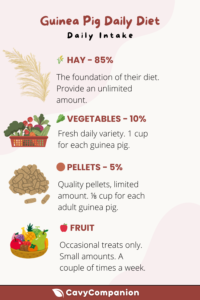
The proper diet has to be nutritionally balanced, including an unlimited amount of fresh hay, 1 cup of vegetables, and around 1/8th of a cup of pellets. This diet guide goes more in-depth regarding the specifics of what a guinea pig needs: [Complete Guinea Pig Diet Guide: Hay, Pellets & Nutrition].
Clean Cage & Environment
A clean environment is one of the simplest ways to keep your guinea pigs healthy. It is where your pet lives and breathes every day and, unlike humans, guinea pigs can not exactly escape or clean a cage once it gets dirty.
Every cage requires regular cleaning that removes any droppings or excess urine. These are usually divided into spot and deep-cleaning.
To learn more about how to clean a guinea pig cage, refer to this guide: [Guinea Pig Cage Cleaning Guide (Complete Schedule & Tips)].
Guinea Pig Hygiene
Proper guinea pig hygiene includes regular nail trims, occasional baths (only when necessary), brushing, and cleaning scent glands. These grooming sessions are also perfect opportunities for quick health checks.
Grooming is more than a way to keep your pet clean and presentable, but it also plays an important role in their health. Regular grooming is a great way to prevent any possible matting, skin infections, or other issues that can develop beneath the fur.
To learn more about guinea pig grooming, refer to this guide: [Guinea Pig Grooming Guide: Nails, Hair Care & Bathing Tips].
Conclusion
It’s always better to call your vet and be reassured than to wait and regret it. Sick guinea pigs decline quickly once they show obvious symptoms. Your awareness and fast action make all the difference.
By learning these warning signs, you’re already being a great guinea pig parent. Stay observant, stay proactive, and your guinea pigs will have the best chance at a long and healthy life.
FAQ
Guinea pigs cannot vomit like humans because they lack a gag reflex. However, they can regurgitate food which may look like vomiting. The stomach ‘twists’ along with other possible signs like drooling or the inability to swallow. This is an emergency. Please contact your vet immediately if you suspect this occurring.
If your guinea pig is showing signs of serious distress such as labored breathing, loss of appetite, inability to move or extreme lethargy please contact a vet immediately. Even if nothing ends up being wrong, it is always better to be safe than sorry. Early intervention makes a significant difference.
Yes but it is rare. Guinea pigs can carry bacteria such as Salmonella or infections like ringworm that is spread by physical contact with your guinea pig and their droppings. To mitigate these risks, hygiene is very important. Always wash hands with soap and water and frequently clean their cage.
It is also possible to be allergic to guinea pigs. If you have an allergic reaction to your guinea pigs, it may only appear after coming into contact with their saliva, urine or dander (skin cells). However, in most cases you could actually be allergic to the hay, not the guinea pigs themselves. Timothy Hay especially is a trigger. Try switching to a different type of hay like Orchard Hay and see if you are still experiencing these allergic reactions.
It is unlikely but possible. Some human illnesses are species specific and cannot transfer to guinea pigs. However certain bacterial infections can potentially be passed on. If you are seriously ill and handling your guinea pigs frequently it is worth contacting your vet for your specified illness.