
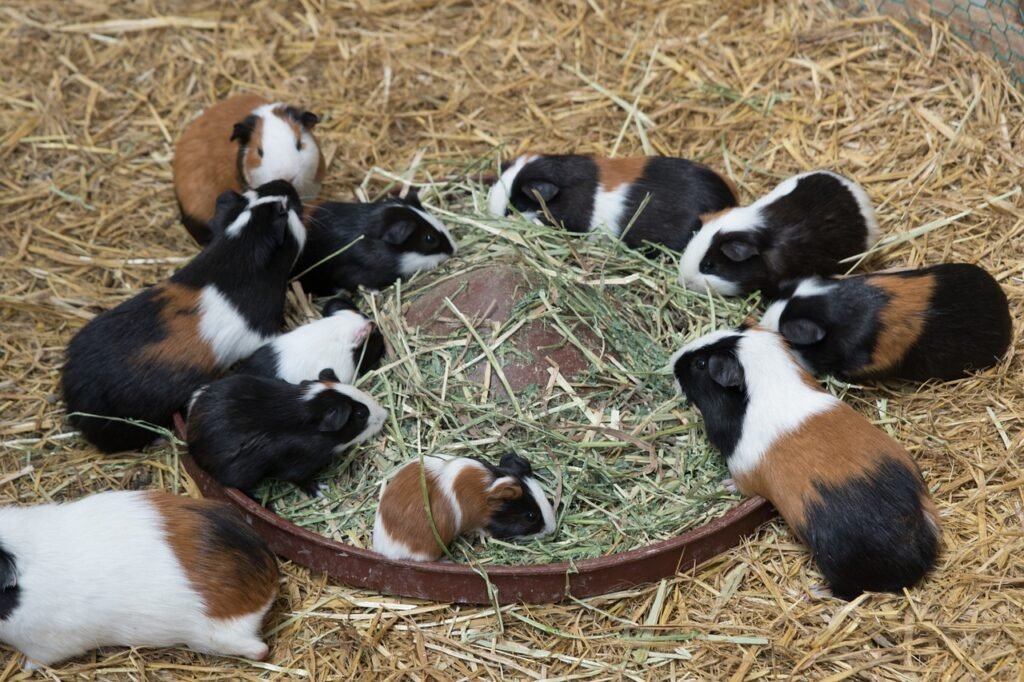
Understanding and providing the best nutrition for your guinea pig is one of the most important aspects of owning these pets. Guinea pigs are very sensitive animals that require a balanced diet to remain healthy. They cannot tolerate different foods that other pets can, and therefore require a specific diet to prevent a long range of health issues.
Guinea pigs are strict herbivores, which means they can only eat plant-based foods. Not only that, they are also sensitive herbivores. Give them the wrong food, and it could lead to very serious problems developing. This can range from issues such as scurvy from a lack of vitamin C to dental disease and gastrointestinal issues. No matter what, nutrition is the best way to keep your pet healthy.
These pets can also be quite picky eaters and develop their own food preferences over time. It is your duty to understand the best guinea pig diet for your pet.
This post contains affiliate links. I may earn a commission if you make a purchase through these links at no additional cost to you.
Understanding Your Guinea Pig Diet
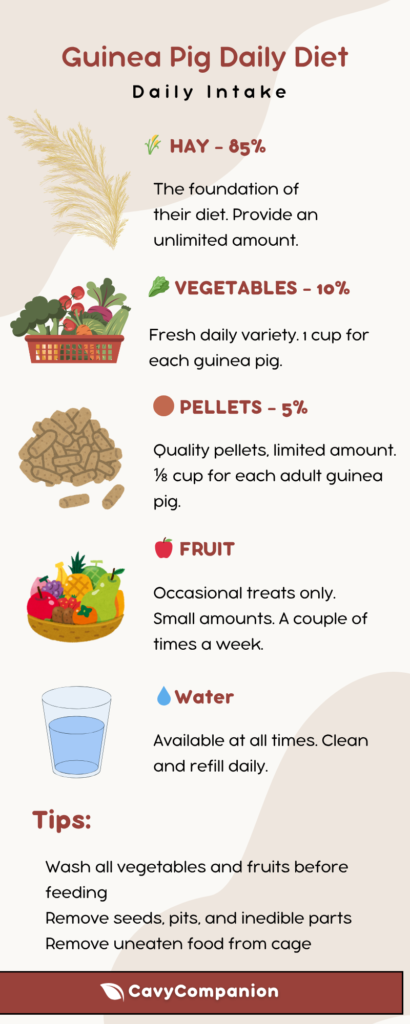
Guinea pigs require a balanced diet of hay, pellets, and vegetables. Each component plays a role in keeping your guinea pig healthy. Here we will go through each part of a daily diet, including the portion sizes, frequency, and advice.
All guinea pigs have a food preference. Observe which vegetables and fruits they love the most and adjust their diet. These preferences develop while they are young, so if you own a young guinea pig, make sure you introduce lots of foods so they will grow to be less picky.
TIP: Always introduce new food slowly to avoid an upset stomach. Major changes may result in your pet refusing to eat
Hay: The Foundation of a Diet
Guinea pigs require an unlimited supply of hay. This means hay should always be available at all times, no matter the time of day. Keep a pile of hay inside the cage that your guinea pig has easy access to. It should remain fresh and clean to encourage eating. Guinea pigs themselves are very clean animals, but thay have the tendency to defecate in food sources such as hay, so ensuring the hay remains clean is essential in making sure your guinea pig is eating enough hay.
Hay is the main source of your guinea pig’s diet. It should be around 85% of their daily consumption. That means each guinea pig should eat roughly its own body size in hay every day. But you don’t need to measure it or worry as long as you keep fresh hay within the cage. Refill whenever it starts looking low. The only time you can begin to worry is if you notice your pet avoiding or refusing to eat hay.
That is because, as your guinea pig’s main source of food, Hay also offers numerous benefits that other foods cannot replace. Hay contains the essential nutrient fiber which greatly aids in their digestive system. Guinea pigs have sensitive digestive systems that require fiber to function. While fiber can be received through vegetables, hay should always be the main source. Hay is also a natural food for guinea pigs. They eat in it, lie in it, forage, and even play in it.
Another great aspect of hay is related to teeth management. The teeth of your guinea pig never stop growing. The main way they manage it is through hay. Chewing hay trims and helps wear down their teeth so they can remain comfortable and healthy. If teeth grow too long, you may begin to notice your pet develop mouth sores or difficulty eating. In this situation, increase the amount of hay or provide them with a chew toy. This should help. If the problem persists or grows, it is best to contact a vet.
Hay can be found in your local pet store. The quality of hay can vary greatly depending on the brand, so always buy from a popular or well-trusted brand such as Oxbow or Small Pet Select. Both are well-known for consistency and overall quality.
Side Note: Small Pet Select offers different “cuts” of hay. For guinea pigs, the second cut is usually the best choice. It has a softer, grassier texture and higher nutritional content. It does cost more, but many guinea pigs do not like the first cut of hay. (“Hay cut” refers to when the hay was harvested.)
Always choose green and fresh dust-free hay. Most times, you can tell a hay’s quality by looking at its color. It should always be bright green. Not yellow or brown. These colors indicate that the hay has lost its nutritional value and benefits. The color may also be accompanied by a poor smell or excessive dust. It is not overtly harmful, but your guinea pig will most likely not eat low-quality hay, which in turn would give birth to a whole variety of problems if this is prolonged. Always use hay from a reputable brand
Dust is natural to any hay, but too much can result in respiratory issues. Simply shake dust off before feeding.
Now, there are also several types of hay, each with its own advantages and disadvantages. The type you choose for your guinea pig is very important, so we will discuss the more common types of hay.
Types of Hay
Timothy Hay
Timothy hay is the undisputed option for adult guinea pigs. It offers the greatest nutritional balance of high fiber with low protein and calcium. A guinea pig is considered an adult at around 6 months old. Around this age, too much protein or calcium can lead to health problems such as bladder stones and obesity (they only need this when they are young). Timothy hay is rich in fiber and contains other essential nutrients that adult guinea pigs require. It has a sweet taste and coarse texture that is excellent for trimming teeth.
The only downside is allergic reactions. Humans can be allergic to any hay, but timothy hay in particular is a main culprit due to its fine dust and pollen content. This can trigger symptoms such as sneezing, itchy eyes, or coughing. If so, there are still several other alternatives that are great for your guinea pig!
My top recommendation is Oxbow Western Timothy Hay (Amazon | Chewy) for its consistent freshness. If you prefer to go with Small Pet Select (Amazon | Chewy), that is also an excellent choice. Small Pet Select is typically more expensive because it is considered a more “premium” hay. Their hay is leafy and has a softer texture that many guinea pigs enjoy.
Side Note: I myself am allergic to pollen, but not to timothy hay; the pollen content is minimal. Most allergy reactions people notice with hay are actually from dust, mold spores, or fine plant particles, not pollen.
+ Nutritional Balance (Rich Fiber & Low Calcium and Protein)
+ Excellent Teeth Management
– Possible Allergic Reactions in Owners
Orchard Hay
Orchard is a great alternative to Timothy hay and an excellent hay option overall. This hay contains all the basic nutrition your guinea pig needs, but with a softer texture and sweeter smell. Orchard hay is particularly great with picky guinea pigs. Your pet may be more receptive to trying this option. Orchard has the most fragrant smell amongst the different types of hay and is quite tasty.
Oxbow Orchard Grass Hay (Amazon | Chewy), or Small Pet Select Orchard Grass Hay (Amazon | Chewy)
Orchard hay is also commonly added alongside Timothy hay to increase variety for guinea pigs. Of course, it is perfectly fine (and normal) to feed your guinea pig only one hay type.
+ Soft Texture (Still Effective for Teeth Management)
+ Sweet Smell
+ Works with Selective Eaters
+ Alternative to Timothy Hay
– Slightly Higher in Calcium
Alfalfa Hay
Alfalfa hay is an option reserved only for young and pregnant (or nursing) guinea pigs. Alfalfa contains the most nutritional content, including high calcium and protein. This makes alfalfa hay the perfect option for younger guinea pigs, who need those extra nutrients to grow and develop. During the development stage, alfalfa plays a vital role in providing enough nutrients to support rapid growth.
Guinea pigs younger than six months should have alfalfa hay. Once they reach around six months, gradually transition them to timothy hay. This transition process should span a couple of days to allow their digestive systems to adjust.
Pregnant (and nursing) guinea pigs should have a mixture of alfalfa and timothy hay. Limit their alfalfa intake. While it does support the growing babies and the mother’s nutritional needs, it should be offered as a supplement, not as the only hay source. Timothy hay (or another grass hay) should still make up the majority of her diet.
Adult guinea pigs no longer need a lot of calcium and protein, and in reality, having too much can be detrimental to their health. Never give alfalfa hay to a guinea pig older than 6 months. If you are unsure of your guinea pig’s age, look for signs such as weight (at least 500g or 1.1lbs), a proportionate body shape, and a fully developed coat. But a visit to the vet is still the most reliable way to determine age accurately.
Oxbow Alfalfa Hay (Amazon | Chewy), or Small Pet Select Alfalfa Hay (Amazon | Chewy)
Side Note: If you cannot determine the exact age, and your guinea pig looks adult-sized and proportioned, assume it’s older than 6 months and avoid regular alfalfa hay.
+ Lots of Nutritional Value
+ Best for Young & Pregnant Guinea Pigs
– Not recommended for Adult Guinea Pigs
Grass
Fresh grass is also a valid option, but only as an addition. Grass does not replace hay in a guinea pig’s diet. If you do plan on feeding your guinea pig grass, make sure no pesticides or chemicals have been added. Lawnmower clippings should also be avoided.
Pellets
Pellets are small, compressed feed for animals that are created by grinding and mixing a variety of ingredients. These pellets offer a balanced nutritional value, and for guinea pigs, are crucial to ensuring they consume enough vitamin C. Guinea pigs (like Humans!) cannot produce their own vitamin C and therefore rely on their diet. Guinea pigs get vitamin C primarily from vegetables, and partially from pellets.
Pellets are optional but are generally recommended. Some owners skip pellets completely and instead increase their guinea pigs’ vegetable intake. For those aiming for a pellet-free diet, consider more extensive research to ensure your diet is enough to compensate for the missing pellets.
The quality of pellets depends greatly on their composition. This quality can vary greatly depending on the brand, so make sure to always check the ingredients before you consider a purchase! The pellets should be grass-based (such as timothy hay) and uniform in shape (meaning there are no obvious chunks or seeds included). Avoid anything with high sugar, fat, added seeds, fruits, or nuts.
Pellets should never replace hay or vegetables, but rather act as an additional supplement for your pets. Feed each adult guinea pig about 1/8 cup of timothy-based pellets per day. Guinea pigs younger than six months, as well as pregnant guinea pigs, can have unlimited alfalfa-based pellets to support growth and development. When buying pellets, search for reputable brands such as Oxbow and Sherwood.
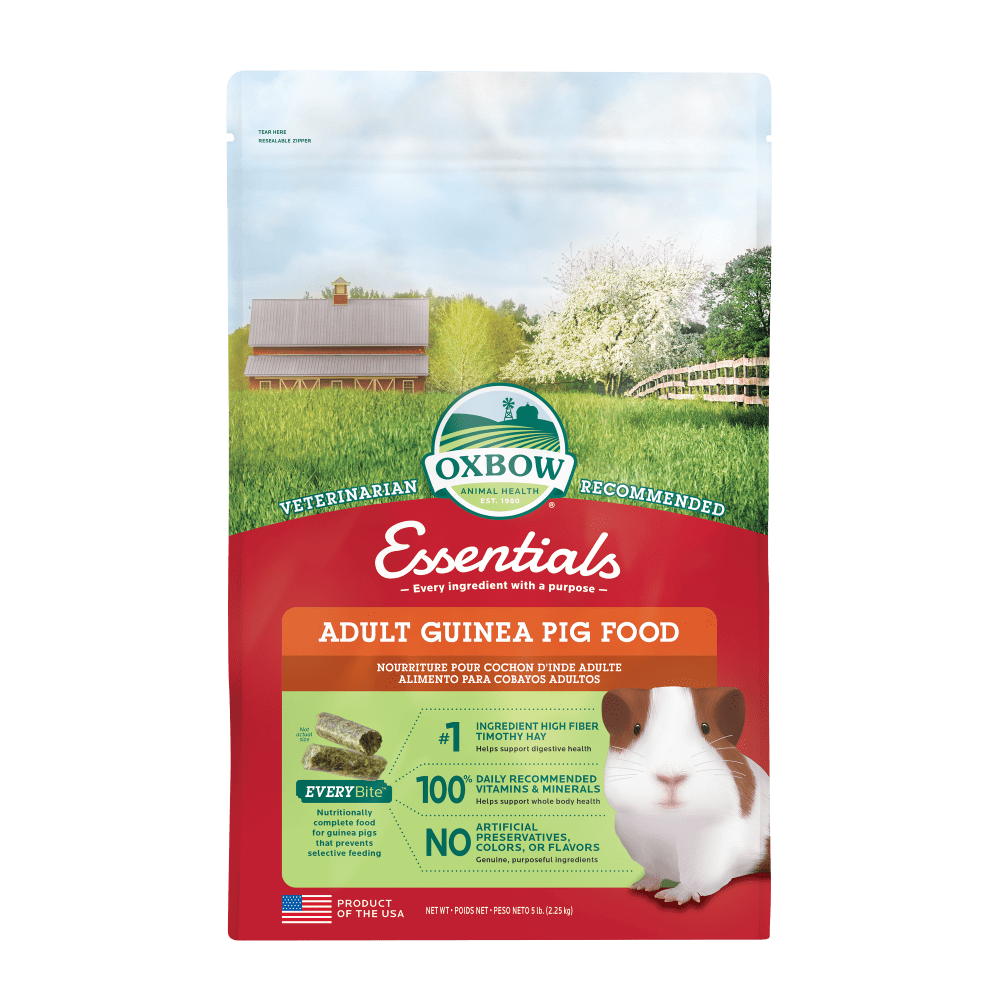
My top pellet recommendation is Oxbow Essentials Adult Guinea Pig Food. I’ve used this with my own guinea pigs for years, and it has consistently provided high-quality nutrition. The pellets are made with natural ingredients, timothy hay, and vitamin C. They also avoid using any artificial colors and preservatives that are common in cheaper brands.
Oxbow Essentials can be more expensive than other pellet brands, but its high quality makes up for the cost. Some owners prefer to avoid ‘filler’ ingredients like soy and wheat. While these pose no harm when used in pellets, they do offer limited nutritional value.
If you prefer a filler-free diet for your guinea pig, you’ll want to compare it with alternatives such as Oxbow Garden Select and Sherwood.
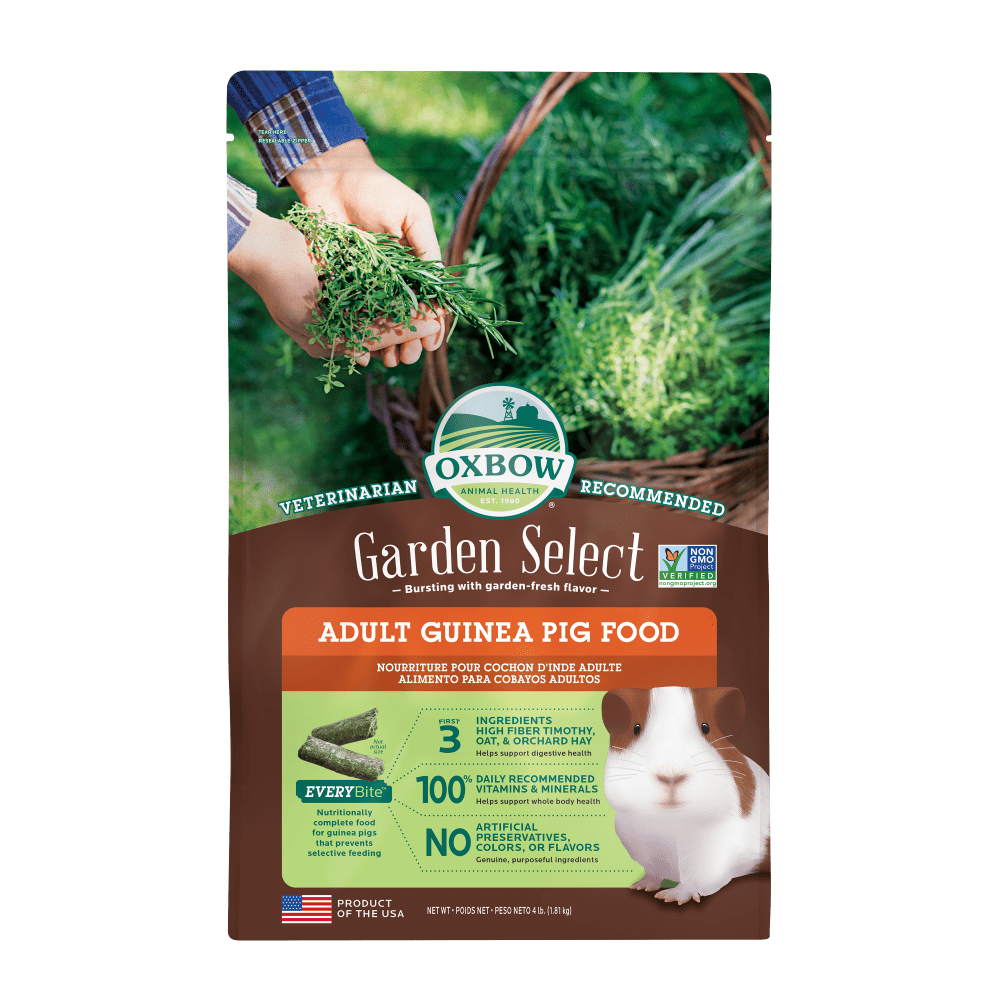
Oxbow Garden Select is an excellent choice with no filler ingredients. They use whole vegetables to provide a healthier alternative. Garden Select is particularly good for picky eaters.
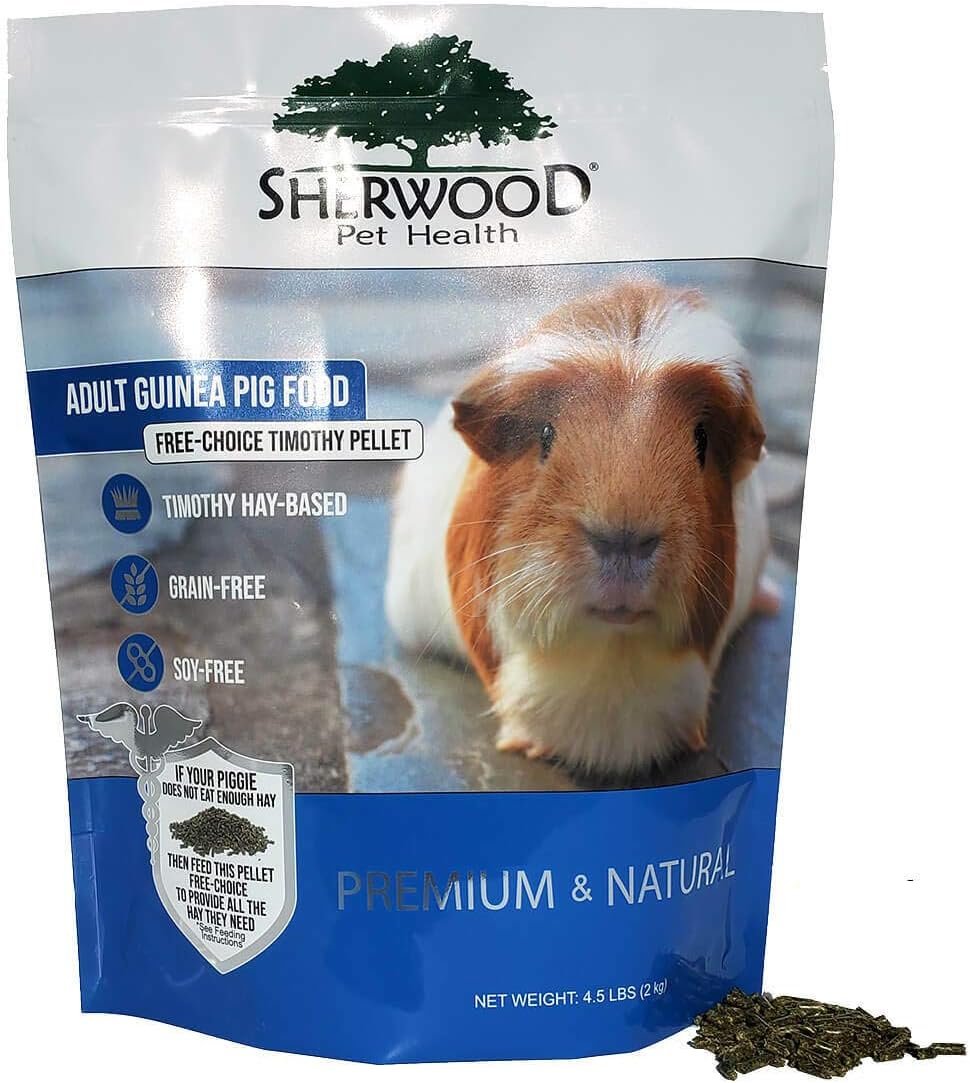
Sherwood Pet Health Timothy Pellets is another great option with no fillers. This brand was developed by a veterinarian specifically for pet health. Most physical stores do not carry this brand, though it’s available online through Chewy, Amazon, and the Sherwood website.
Each brand also offers a “Young Guinea Pig” formula for guinea pigs under six months old. This option is also suitable for pregnant and nursing guinea pigs, since they share the same increased nutritional needs.
Vegetables
The primary source of Vitamin C! Each guinea pig should consume about 1 cup of vegetables daily. So that means this portion should be adjusted proportionally based on the number of guinea pigs you own (Such as 2 cups for 2 guinea pigs).
Vitamin C is essential for guinea pigs and is one of the most important components of their diet. As said before, guinea pigs cannot produce their own vitamin C. They get it through their diet. Having it is critical. Insufficient vitamin C can lead to a range of health issues and could even prove fatal.
Vegetables are best served as a mix rather than alone. Each type contains different amounts of vitamin C and other nutrients, so offering a variety ensures your guinea pig receives a balanced diet. Avoid feeding the same vegetable every day, as this can cause them to miss out on essential nutrients.
Guinea pigs should be offered a variety of three to five different vegetables each day, with the selection rotated regularly.
TIP: For better digestion, it’s best to divide this into two smaller servings (morning and evening). Some guinea pigs do not handle large portions all at once.
Guinea pigs cannot eat every vegetable; there are several that must be avoided to avoid health issues. The frequency and amount also matter. Guinea pigs have very sensitive digestive systems that can be easily harmed if they consume the wrong food or eat excessively.
For more in-depth information, I have created a guide specifically for vegetables here: [Safe Vegetables for Guinea Pigs: Complete Guide]
Always use fresh and washed vegetables. Nothing cooked, canned, frozen, or unripe.
TIP: Always do a quick Google search before you feed your guinea pig a new item. Trust me, there is a lot more than you think!
Fruits
Fruits are another component you need to be careful with. All fruits contain a high sugar content. While guinea pigs can consume sugar without any harm, too much is harmful. An excess amount of sugar can lead to weight gain, obesity, and diabetes. Therefore, fruits should only be fed to guinea pigs in small quantities.
Unlike the other foods mentioned in this post, fruits are technically not a part of your guinea pig’s diet. Instead, they are treats. It should only be given a few times a week.
For more in-depth information, I have created a guide specifically for fruits here: [Safe Fruits for Guinea Pigs: Complete Guide]
Water
When you first get a guinea pig, it is a good idea to try using both a water bowl and a bottle just to see which one they prefer. Depending on your guinea pig, they may find it easier to use one option over the other. Clean and refill it daily to avoid it from becoming contaminated. Guinea pigs can get messy with their food, especially when using bowls (they always find a way to poop in there). They will not drink the water if it gets dirty.
If you are considering using a water bowl, I recommend a heavy ceramic or attached water bowl. Those types are harder to tip.
Pet owners typically choose between two styles of water bottles: ball-bearing and gravity-flow. The ball-bearing water bottle is the more common type. They prevent leaks and keep the water clean; however, some cheaper ones can clog or drip constantly. Gravity-flow bottles allow your guinea pig easier access to water, but this option can be prone to leaks.
Glass bottles are the preferred option; harder to chew and last longer. Plastic bottles are cheaper but can harbor bacteria and get chewed over time. The preferred size range for a water bottle is 16 to 32oz.
The Lixit Glass Water Bottle is a leak-proof and reliable option. It comes in a range of sizes and is quite durable.
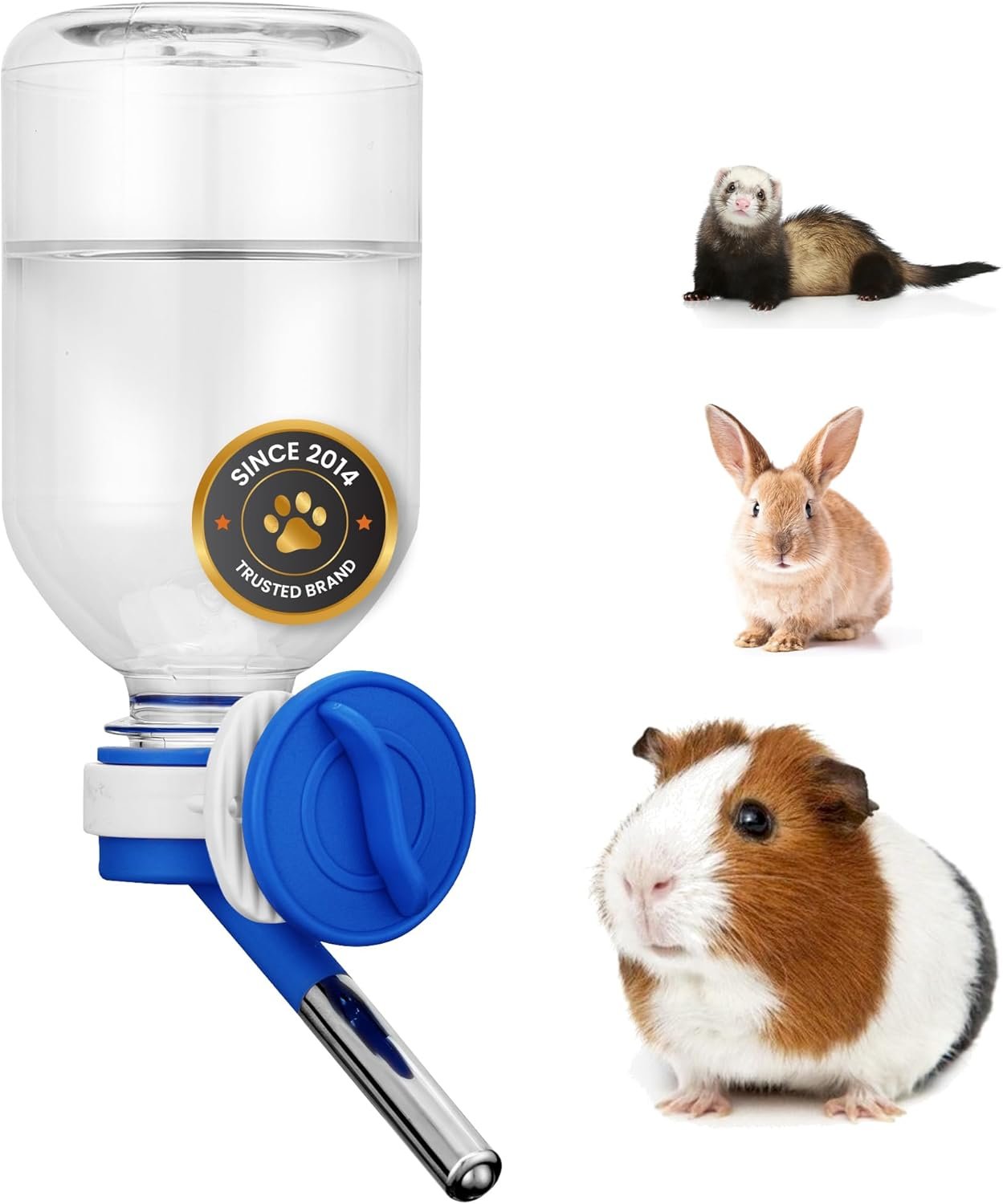
The Choco Nose No-Drip Water Bottle is a highly rated plastic bottle. It works just as well as the glass bottles, though it is on the smaller side.
TIP: Always double-check that water is flowing properly after refilling.
Store-bought Treats
“Natural” treats, such as fruits or a favorite veggie, are typically given as treats. However, pet stores do have several commercial guinea pig treats available. These treats can vary greatly in quality (just like pellets) based on their ingredients. Look for treats made with simple, natural ingredients like dried herbs or plain vegetables.
Many ‘gourmet’ or fancy bags contain added sugars, seeds, nuts, or artificial ingredients that offer little nutritional value and can potentially harm your guinea pig.
Be aware that most store-bought options are not good for your pet. Always check the ingredients.
The best option is to stick with small amounts of fruit or favorite veggies as treats. They are healthier and safer than most store-bought options.
Foods to Avoid in a Guinea Pig Diet
This list doesn’t cover every unsafe food, but it includes the most common ones. Feeding your guinea pig any of these can cause serious health problems or even be fatal. For a more comprehensive list, use the Vegetables and Fruits lists shown above.
Seeds and Nuts: Always remove them from vegetables and fruits before feeding. They can be choking hazards and are difficult to digest. Some seeds also contain toxins that can be fatal (Apple Seeds & Stone Fruit Pits).
Citrus Fruits: All citrus fruits contain levels of citric acid. Some have lower levels and are safe to feed in moderation (such as oranges and clementines), but most citrus fruits should be fed with caution or avoided entirely. Too much acidity can cause health issues.
Canned, Cooked, and Frozen Vegetables/Fruits: Avoid anything that is not fresh.
Dairy: Guinea pigs are lactose intolerant
Grains: Hard to digest and processed
Iceberg Lettuce: Iceberg lettuce has no nutritional value; use better options such as romaine and green leaf lettuce
Avocado: Every part of an avocado contains a toxin that can be fatal to guinea pigs.
Conclusion
Providing the right diet for your guinea pig doesn’t have to be complicated. Focus on unlimited fresh hay, a small portion of quality pellets, and one cup of vegetables for each guinea pig. With these basics covered, your guinea pig will have great nutrition. Remember that every guinea pig is unique. Observe their preferences and adjust accordingly, but always prioritize their nutritional needs over their pickiness.
For a more extensive list regarding nutrition, refer to these materials: [Safe Vegetables for Guinea Pigs: Complete Guide] and [Safe Fruits for Guinea Pigs: Complete Guide].