
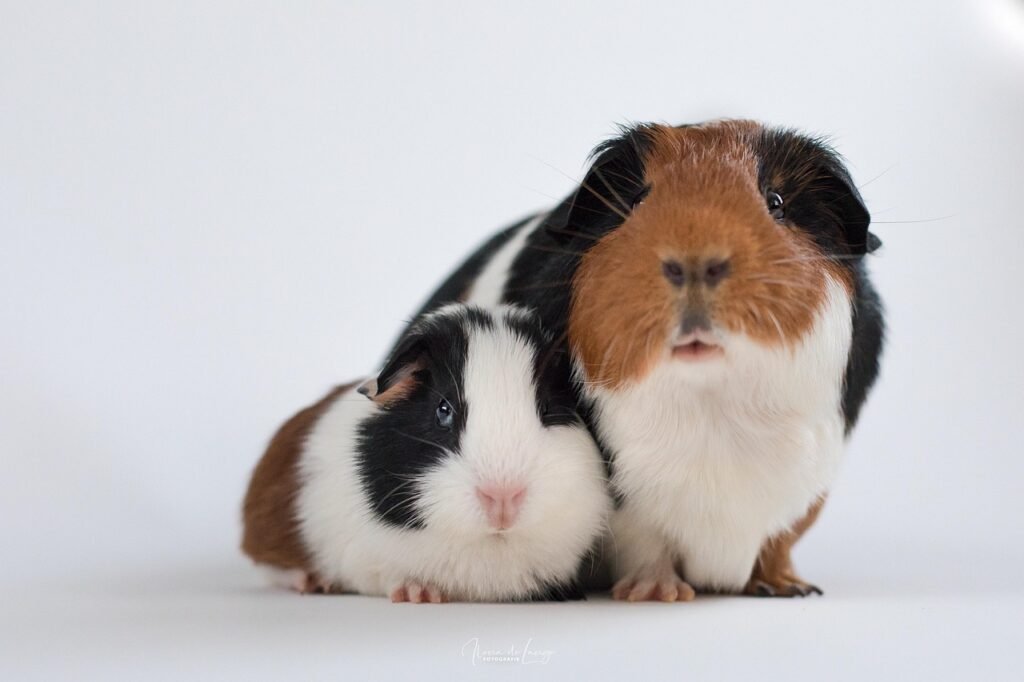
Here, we will discuss the basics of when and how your guinea pig needs grooming. Your pet’s grooming needs depend on their breed. Long-haired guinea pigs need significantly more care than short-haired ones. For the most part, guinea pigs can take care of themselves, but there are also times when these pets require extra attention from their owners.
Grooming isn’t just about keeping your pet looking neat — it’s also an important way to bond and monitor their health. During grooming, you have the opportunity to check for any indicators such as rashes, lumps, or signs of infection. Guinea pigs hide abnormalities in their health, so it is essential to take time to catch any issues as early as possible.
In this guide, we’ll cover the essentials of guinea pig grooming:
How often to trim nails and the safest technique
Hair care differences between long-haired and short-haired breeds
When guinea pigs actually need baths (hint: not often!)
Recommended grooming tools
Nail Trimming: How Often and How to Do it Safely
Just like human nails, a guinea pig’s nails never stop growing. If these nails are allowed to grow too long, your pet may start experiencing discomfort and possible foot pain. Guinea pig feet (especially with long nails) can quickly accumulate a large amount of dirt that sticks into the crevices of their nails. If it becomes overgrown, they are known to ‘curl’ into the footpad —a painful and possibly infectious result. For this reason, it is important for any guinea pig owner to know how to cut their pet’s nails!
Ideally, a guinea pig’s nails should be cut once a month.
Nail Trimming Tips
Before you start cutting your guinea pig’s nails, first take time to identify the “quick.” This term refers to the more reddish part of the nail. This is the area that has blood vessels. If you cut it, your guinea pig will bleed. This is more easily seen in white nails than in black nails. If your pig has black nails, use a small light to find the “quick.” Only trim the tips of the nails.
If you accidentally cut the quick and it starts to bleed, apply styptic powder to the nail. Gently press on the area until the bleeding stops, which should only take a few minutes. If the bleeding is heavy and continues for more than 10 to 20 minutes, contact your vet.
- Always provide treats to make your guinea pig as relaxed as possible
- Gently wrap your pet in a blanket. This helps them feel more secure and relaxed
- Use proper tools, such as small animal nail trimmers & always have styptic powder on hand
- Cornstarch and flour are good alternatives to styptic powder
A really good guide can be found on GuineaDad! They provide step-by-step instructions with accompanying images and videos. Read it here.
Hair Care
This is where the difference in your guinea pig’s breed matters. Short-haired piggies, such as the American and Rex breeds, do not really need their hair trimmed or brushed. Their hair does not grow nearly as long, so it is easier to maintain. The only exceptions are if their “butt” hairs grow too long. Those areas may need a slight trim to prevent your pet’s pee from sticking to the hair.
In comparison, long-haired guinea pigs need more attention, from regular trimmings to brushing. They should be brushed several times a week to prevent any matting and tangles. Hair grows fast, so regular trimmings are essential to keeping it clean and healthy. When cutting, focus on areas such as the rear and underside. These spots can trap urine and feces.
Hair Brushing/Combing
Brush in the direction of the fur growth. Follow the direction of your guinea pig’s fur. You can tell which way it grows by observing how the fur naturally falls. If it’s hard to tell by sight, gently run your hand over their coat. It will feel smooth when you move with the growth and slightly rough or resistant when you move against it.
If you notice any matting or clumps in the hair, do not rush to comb them out. Instead, gently separate the individual hairs with your fingers. This avoids making the process painful for your guinea pig and slowly loosens the mats.
Recommended Combs/Brushes:
It is important to use ones that do not yank or pull at the hair. You want to make your grooming sessions as relaxing (and short) as possible for your pet.
Long-Haired Guinea Pig Options
Wide-Toothed Combs: These types of combs have wide teeth that are great for detangling and removing loose hair without pulling. Get ones with more rounded or blunt tips. Two-sided combs, a wide-toothed side and a fine-toothed side for sharper work, are a great addition.
Short-Haired Guinea Pig Options
Soft Bristle Brushes: High-quality option for short-haired guinea pigs. It is perfect for removing loose fur and keeping smooth coats.
Toothbrush (Soft-Medium bristles): Yes. They work. Of course, make sure it is unused. Toothbrushes have soft enough bristles that work gently on your pet’s hair.
Other Good Choices: A few popular alternatives include Tangle Teezers, and the Safety First Brush. Both are gentle enough for small pets like guinea pigs and easy to hold during grooming.
Hair Trimming
For beginners, I recommend having two people involved: one holding the guinea pig, the other cutting. This is to keep the guinea pig still enough for the cutter to concentrate solely on cutting. Use sharp scissors to trim the tips (make small, short cuts). Focus on the private area and any excess hair that may be dragging or poking out.
Blunt scissors can pull at the hair, so ensure you have scissors that are sharp enough to get clean cuts. Round-tipped ones are the safest option.
If you are comfortable, you can also use pet-safe clippers. Some guinea pig parents say it yields faster results, but I have always been used to scissors. Make sure the clippers are silent to avoid startling your pet.
How to Bathe a Guinea Pig (When and How Often)
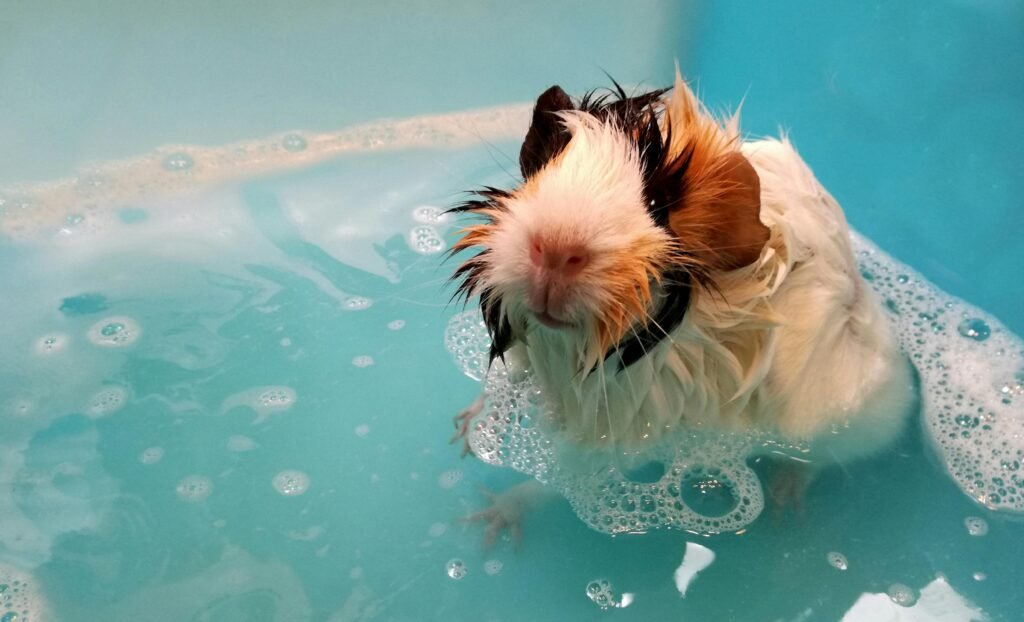
As said before, guinea pigs can clean themselves. They do so regularly. Once in a while, you can catch your pig licking their fur just like a cat, or vigorously rubbing their face. This is their way of bathing themselves. Multiple guinea pigs can also groom each other as a show of bonding. Therefore, pet parents do not need to worry too much about bathing their guinea pigs.
The only times they need one are if they are visibly soiled. This may be the result of excretions such as pee or poop sticking to fur, dirty behinds and paws, or a bad odor. Baths should only be done when needed. Excessively bathing your guinea pig will only lead to more dry and irritated skin since you would be stripping them of their natural oils.
Side Note: Guinea pigs have a white ‘discharge’ from their eyes that acts as a type of cleaning fluid. This is why they love rubbing their face so much. By doing so, they are actually spreading this fluid all over their body as a way to keep clean.
Bathing Tips
Just like with any type of grooming mentioned on this list, the most important part is making sure your pet is as relaxed as possible. Take time to collect their favorite treats so they associate cleaning with food.
First, prepare a basin of water. This can be a container, a sink, or even a bathtub. Guinea pigs do not like swimming or deep water, as it causes them stress and can be a danger to them. Make sure to only fill your basin partially (just enough to reach their legs). The water should be lukewarm. That would be around 90° to 95° F or 32°-35° C if you are using a thermometer.
When you place your guinea pig into the water, they should still be able to stand comfortably. Scoop water and pour it over their body. Do not get it into their face or eyes. Gently apply a pet-friendly shampoo of choice over their body (again, avoiding their face) and rinse it off through the scoop method.
When done, make sure you offer treats and a thorough drying with a blanket. Make sure your pet is completely dry before releasing them!
Side Note: Guinea pigs are able to swim, but that does not necessarily mean they like it
Shampoo
Always use a pet-friendly shampoo for your guinea pigs. Normal human soaps and shampoos contain chemicals that are too harsh. Avoid the scented options as they could also be irritating and affect their breathing.
Conclusion
Regular grooming is one of the main components in keeping your guinea pigs healthy and happy. Start slowly if your pet isn’t used to grooming, and always reward them with treats. With patience and the right tools, grooming becomes a bonding experience for both of you. For more guinea pig care tips, check out our other guides [How to Bond Guinea Pigs] and [Guinea Pig Cage Cleaning Guide (Complete Schedule & Tips].