
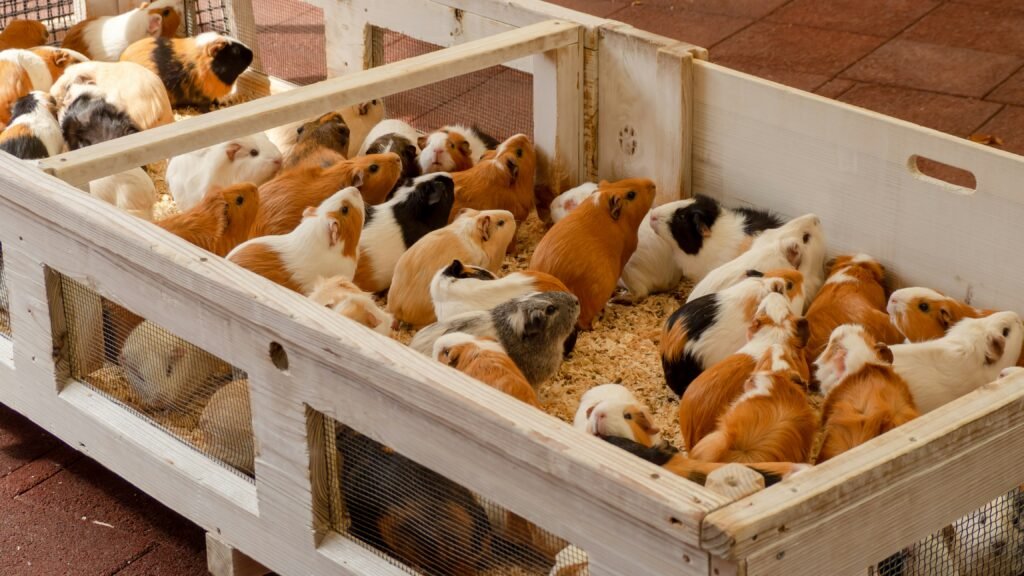
Guinea pig cage cleaning is essential for creating a safe and healthy environment for your pets. Guinea pigs are naturally clean animals. They self-groom constantly. Their cages, however, are the exact opposite. Guinea pigs poop over a hundred times a day. They also pee around every 15 minutes. You will also find that guinea pigs are quite the messy eaters. Hay piles are especially prone to getting soiled.
Guinea pigs excrete waste while they are eating, which is why most of this mess occurs near their food sources. It is common to find wet hay or droppings scattered in pellets. Guinea pigs are clean animals and may very likely refuse to eat any food that has been soiled.
That is why cleaning is so important. A cage should be spot-cleaned daily and deep-cleaned at least once a week. Hay piles should be maintained, and water refilled every chance you get.
This is how to clean your guinea pig’s cage.
This post contains affiliate links. I may earn a commission if you make a purchase through these links at no additional cost to you.
Daily Maintenance (Spot-Cleaning)
Spot-cleaning is when you clean only a specific area within a cage rather than the entire cage itself. These are the areas your guinea pig spends most of their time in. Any area that has the most mess. The most important task of spot-cleaning is to remove just enough mess to maintain a clean environment in between deep-cleaning.
The biggest targets are droppings and any stray hay scattered around the cage. For this, I recommend a portable vacuum with a broom and dustpan set.
Before you start cleaning, remove the guinea pigs from the cage. Some guinea pigs (especially if they hadn’t become comfortable with your home) may feel trapped. It may also be easier without them in the way; guinea pigs love investigating what you are doing.
A silent vacuum is preferred as guinea pigs are easily frightened by loud noises. Skip corded ones as they can get in the way and are usually the inflexible option for getting into smaller crevices. It doesn’t need to be large, just enough to collect enough poop without a problem.
Most vacuums tend to clog easily with hay, so it’s better to use a broom instead. Simply sweep up any hay piles. Clean, dry hay can stay in the cage for a while, but once it becomes soiled, be sure to remove it. Never re-use soiled hay.
How to Manage Hay
When cleaning a guinea pig cage, hay is often the biggest challenge for owners. It’s a crucial part of a guinea pig’s diet, but they also use it for burrowing, playing, and sleeping — which means it ends up everywhere.
To make cleaning easier, consider using hay racks or hay bags. These options are great at containing mess. However, be sure to observe your guinea pigs; some prefer loose hay piles instead. If you stick with hay piles, try placing a tray underneath them. During cleaning, you can simply remove and empty the tray for quick cleanup.
Food & Water Maintenance
Do not allow food such as vegetables and fruit to remain inside the cage for more than one hour. This prevents the food from spoiling and becoming a source of bacteria. Hay should always stay inside the cage. It can be replaced only when it is visibly soiled. Check their pellet bowl for any feces. Replace leftover pellets daily – they can grow stale and lose vital nutrients such as vitamin C.
Many guinea pig parents may refill their water bottle but not clean it. Bacteria can build inside the bottle and the spout. Use a bottle brush to clean the insides once a week.
Weekly Deep-Cleaning
A deep cleaning should be done once a week. This is when EVERYTHING in a cage is removed and cleaned or discarded. This includes any bedding, fleece, or item your guinea pig has come into contact with.
Cleaning Fleece
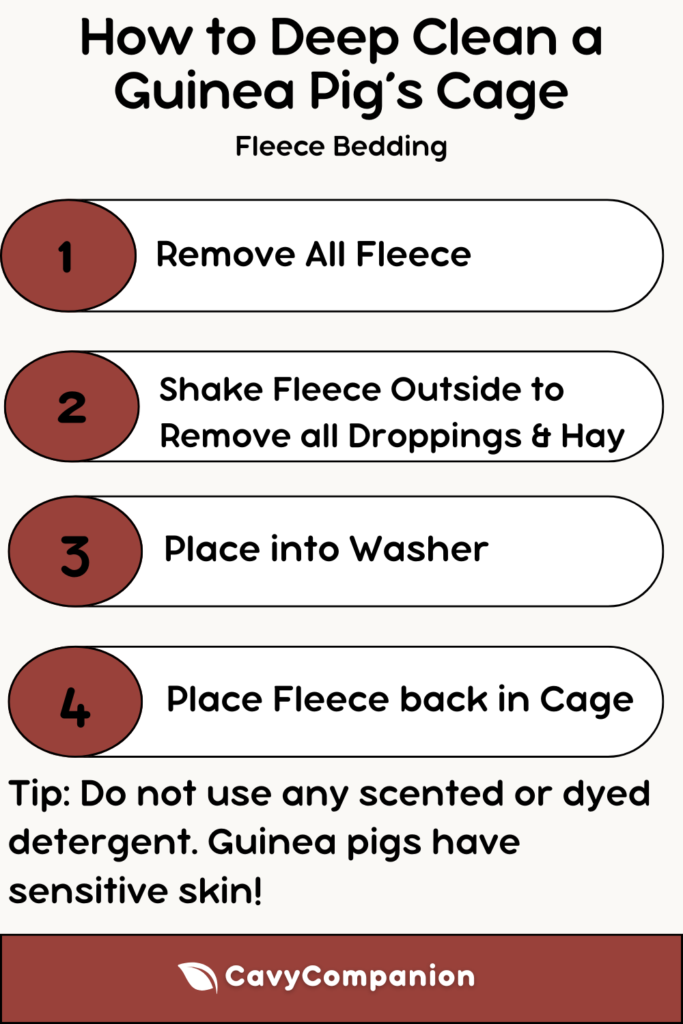
Remove all fleece from the cage and brush off any droppings or hay. To prevent mess, I recommend taking the fleece outside and shaking off any leftovers. These can stick to the fabric, so it’s important to remove most of them to prevent your washer from getting clogged. This applies to bath mats, puppy pads, blankets, or anything else that is machine washable.
Use a free & clear detergent along with half a cup of white-distilled vinegar to remove any remaining odor. Remember to never use any scented or dyed detergent. Fabric softener is not needed.
TIP: Tumble dry on low or air dry the fleece. Avoid high heat.
The chloroplast base of the cage can be cleaned with water and vinegar. Wipe it down with paper towels or a clean cloth. Give it enough time to dry before re-adding the fleece.
Cleaning Loose Bedding
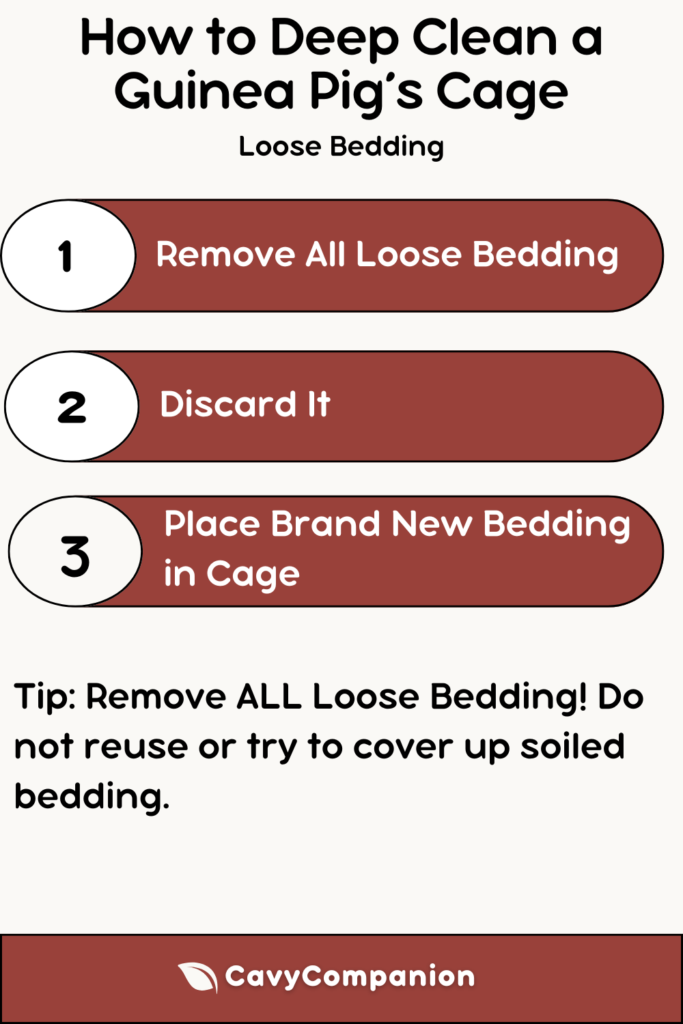
Loose bedding is not reusable, so a deep cleaning requires brand new bedding for every replacement. That also means it is easier to clean than fleece.
Simply discard all soiled bedding and replace it with new bedding. Never try reusing or covering up soiled bedding. Bacteria can build up quickly and pose a health risk for your guinea pigs. It is always better to have fresh bedding
Warning Signs Your Cage Needs Cleaning
Even with a regular cleaning schedule, some days are just messier compared to others. These are the warning signs that your cage is in dire need of a cleaning.
Odor
You may begin to smell a strong and pungent odor whenever you pass by the cage. This is the smell of ammonia beginning to build up, usually from excess urine absorbed by the bedding. Once this smell occurs, clean the cage immediately, as guinea pigs can become sick from prolonged exposure.
Your Guinea Pigs are Avoiding Certain Areas
You may start noticing your guinea pigs remaining in one corner and refusing to enter certain areas or use the rest of the cage. They are avoiding the dirty parts of the cage.
Flies & Insects
Insects can be attracted to the cage because of the accumulation of waste. Once they start appearing, it is important to act quickly. Insects and flies, in particular, can greatly harm your pet. They can spread all sorts of diseases and can transmit parasitic infections, such as mites and fleas. The presence of flies can lead to a life-threatening condition known as flystrike. This happens when a fly lays an egg on a guinea pig. The maggots then proceed to feed on the guinea pig for nutrients.
Always clean out old food. Uneaten food should not spend more than a day within a cage.
Wet or Matted Bedding
If your bedding is prone to wetness, it may be because it is not absorbent or deep enough. Urine should never pool onto your guinea pig’s feet. Always make sure there are enough layers of bedding to soak up urine.
Use absorbent mats such as bath mats and vet beds in high activity areas to better soak up urine.
Cleaning Schedule
The cage size and the amount of guinea pigs you own matter. Larger cages can go slightly longer between full cleanings because waste is more spread out. However, the amount of guinea pigs affects this frequency
The more guinea pigs, the more frequently you would need to clean. Therefore, there is no ‘fixed’ schedule that works for every owner, as factors such as cage size, setup, and the overall cleanliness of your guinea pigs can all impact how quickly the cage gets dirty.
Side Note: It is possible to litter train a guinea pig, but it can be a long process, and even then, you may still find droppings scattered around.
Common Cleaning Mistakes to Avoid
Using harsh chemicals: Avoid the use of air fresheners and strong cleaning agents. Guinea pigs have a sensitive respiratory system, and breathing all this can take a toll on their bodies. Stick to white vinegar and water, or pet-safe cleaners specifically labeled for small animals
Reusing soiled bedding: Do not try to “save” bedding by removing just the top layer. All you are doing is leaving the ammonia-soaked bedding. Always do a full change
Cleaning too infrequently: Waiting until you smell the cage means you’ve already waited too long. Guinea pigs were living in that smell for days.
Going overboard: You don’t need to deep clean daily. Guinea pigs find comfort in familiar scents. Excessive cleaning would not give them time to recognize a smell. Once a week is perfectly fine.
Why Regular Cleaning Matters for Guinea Pig Health
Your guinea pig’s health should never be in jeopardy because of an unclean cage. It is very easy for a cage to accumulate waste. That waste becomes a breeding ground for all sorts of bacteria and ammonia to take root, and once they do, your guinea pig’s health will be affected. There’s a long list of all the health consequences they may face. Cleaning is a responsibility one has to take when caring for a pet. It is not easy, but being as consistent as possible goes a long way in keeping your pets happy.
For more information on setting up the perfect cage, check out our guide on [How to Set Up a Guinea Pig Cage] or [Best Guinea Pig Bedding for 2026: Paper, Wood & Fleece] to choose the best bedding for your guinea pig.