
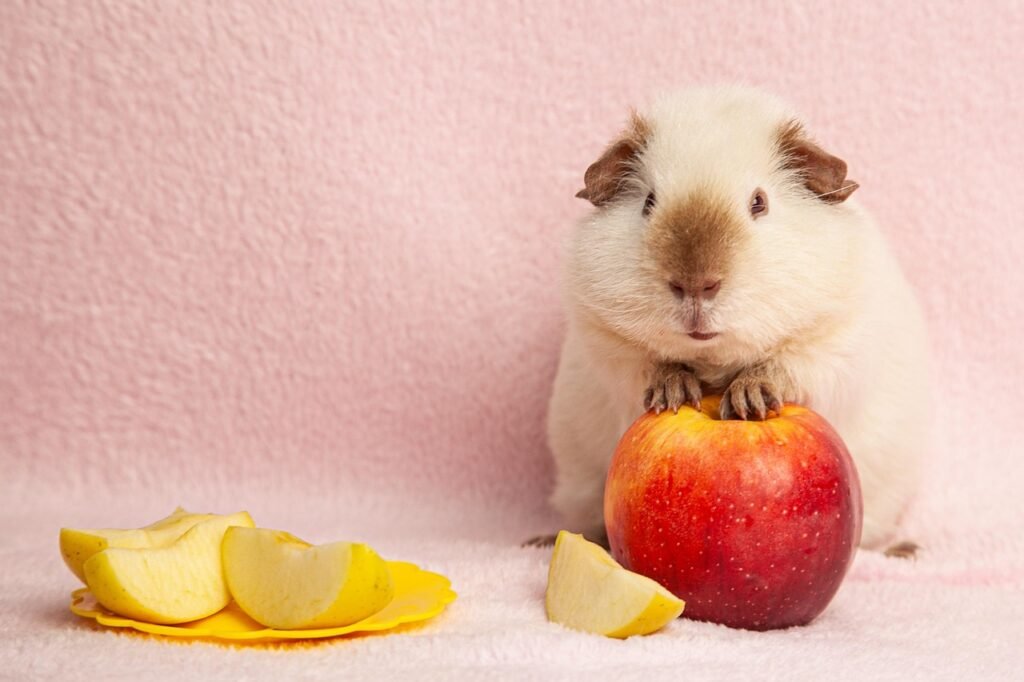
Fruits are additions to a guinea pig’s diet, not a main component. It is not a requirement like other more ‘important’ food options, such as vegetables or hay. Guinea pigs get their nutrients primarily from vegetables and can live comfortably without the addition of fruits. However, fruits are highly recommended as an occasional treat. Every fruit contains sugar- more sugar than vegetables. Overfeeding on sugar can lead to a range of health problems, just like with humans. This guide breaks down the best fruits for guinea pigs, along with feeding amounts, frequency, and important safety notes. This guide is regularly updated to ensure accuracy.
For the vegetables list, look here: [Safe Vegetables for Guinea Pigs: Complete Guide]
For every fruit on this list, make sure to rinse it well and remove any seeds or pits. Washing helps get rid of any pesticides or chemicals that may be on the skin. Seeds and pits can be a choking hazard (or even toxic), so removing them keeps your guinea pig safe while eating.
Do not feed fruit if your guinea pig is obese or has diabetes.
Fruits with Lower Sugar Content
Even though these are ‘lower sugar content’ fruits, that is only when compared with other fruits. Everything on this list still contains sugar and should remain limited. Every fruit is “high in sugar” when compared with vegetables. These are the ‘regular treats.’
| Fruit | Safe (Yes/No) | Amount per Guinea Pig | Note |
| Raspberry | Yes | Two to three times per week (1-2 raspberries) | High in vitamin C and fiber |
| Blueberry | Yes | Two to three times per week (1-2 blueberries) | Has the least amount of vitamin C among the berries, but has the most antioxidants |
| Strawberry | Yes | Two to three times per week (1-2 strawberries) | Contains more vitamin C than any other berry |
| Blackberry | Yes | Two to three times per week (1-2 blackberries) | Good source of vitamin C and fiber |
| Cranberry | Yes | Once every two to three weeks (1/2 of a berry) | Low in sugar but very acidic |
Side Note: All berries are a great source of vitamin C and fiber. The berry’s leaves and ‘tops’ of the berry are edible. Always remove the stems, as they can cause digestive upset. Most berries are only mildly acidic, but cranberries are highly acidic and should be offered only rarely. Excess acidity can lead to stomach upset and mouth sores.
The majority of fruits have a high water content. Melons, especially, are great options for hydration.
| Fruit | Safe (Yes/No) | Amount per Guinea Pig | Note |
| Cantalope | Yes | Two to three a week (1 small cube) | Only feed the fleshy part of the Cantaloupe. High water content. Remove the seeds and skin/rind as they are difficult to digest. |
| Honeydew | Yes | Two to three a week (1 small cube) | Contains both vitamin C and fiber. High water content. Remove the seeds |
| Watermelon | Yes | Two to three a week (1 small cube) | High water content. The rind is edible. Remove the seeds |
| Papaya | Yes | Two to three a week (1 small cube) | Rich in vitamin C and antioxidants. Remove the seeds and skin. The seeds contain traces of cyanide, and the skin has oxalic acid |
Fruits with Moderate Sugar Content
These fruits fall in the ‘middle’ for sugar. These are the ‘occasional treats.’
| Fruit | Safe (Yes/No) | Amount per Guinea Pig | Note |
| Apple | Yes | Once or twice a week (one slice) | Has lots of nutrients and are a good source of vitamin C. The skin is edible, but remove the seeds. Apple seeds have traces of cyanide. |
| Guava | Yes | Once or twice a week (one small cube) | Contains one of the highest amounts of vitamin C among fruits. Remove the seeds. |
| Pear | Yes | Once or twice a week (one slice) | The skin is edible. Remove the seeds and pits |
| Kiwi | Yes | Once or twice a week (one slice) | Good source for vitamin C and fiber. Remove the skin and seeds |
| Orange (All Types) | Yes | Once or twice a week (one slice) | Orange is a citrus fruit, but it only has mild acidity. |
Stone fruits, also known as “fruits with pits,” have a hard center that encloses a seed. These pits should always be removed. They not only pose a choking hazard, but may also contain trace amounts of toxins.
| Fruit | Safe (Yes/No) | Amount per Guinea Pig | Note |
| Peach | Yes | Once or twice a week (one cube) | Good source of vitamin C and fiber. The skin is edible. Peach pits are toxic; remove |
| Plum | Yes | Once or twice a week (one cube) | Skin is edible. Plum pits are toxic; remove |
| Nectarine | Yes | Once or twice a week (one cube) | Skin is edible. Nectarine pits are toxic; remove |
| Mango | Yes | Once or twice a week (one cube) | The skin is too tough for digestion. Mango pits are toxic; remove |
Fruits with Higher Sugar Content
These fruits have high sugar even when compared with other fruits. They should only be offered as rare treats.
| Fruit | Safe (Yes/No) | Amount per Guinea Pig | Note |
| Pineapple | Yes | Once a week (two small cubes) | It is a great source for vitamin C. Remove the skin and leaves. |
| Grape | Yes | Once a week (One small grape) | Grapes are high in sugar and vitamin C. Cut larger grapes into smaller pieces. |
| Banana | Yes | Once a week (One slice) | Remove the peel. Banana peels are not recommended as they can be hard to digest. |
| Cherry | Yes | Once a week (One cherry) | Cherry is also a stone fruit, but with a higher sugar content. Cherry pits are toxic; remove |
Citrus Fruits: Feed with Caution
This section is composed of citrus fruits. These fruits don’t have much sugar; rather, their acid concentration is the reason for caution. All citrus fruits contain citric acid. In small amounts, citric acid poses no harm to your guinea pig. But some citrus fruits have a very high concentration of this acid. If taken excessively, your guinea pig may develop health issues like mouth sores and digestive problems.
Lower-concentrated citrus fruits like oranges and clementines are safe to eat. The rest are listed here. It is best to avoid these options entirely or give tiny portions over long intervals.
| Fruit | Safe (Yes/No) | Amount per Guinea Pig | Note |
| Lemon | Caution/Avoid | Avoid Entirely or Once a Month (Very tiny amount) | Very high in citric acid. Can cause stomach upset or mouth irritation if fed in larger amounts. |
| Lime | Caution/Avoid | Avoid Entirely or Once a Month (Very tiny amount) | Very high in citric acid |
| Grapefruit | Caution/Avoid | Avoid Entirely or Once a Month (Very tiny amount) | Less citric acid than lemon and lime, but still high |
| Pomelo | Caution/Avoid | Avoid Entirely or Once a Month (Very tiny amount) | Less citric acid than lemon and lime, but still high |
Fruits to Avoid
All the fruits within this section should never be fed to guinea pigs under any circumstances. These can cause serious health issues, digestive problems, or even be fatal.
| Fruit | Safe (Yes/No) | Amount per Guinea Pig | Note |
| Avocado | NO | NEVER | Every part of an avocado has toxins. Can be fatal |
| Dried Fruits | NO | NEVER | Never feed your guinea pig dried fruits! Always offer fresh options. |
| Canned Fruits | NO | NEVER | Canned fruits often have added preservatives. These can have extra sugar and harmful additives. |
| Frozen Fruits | NO | NEVER | Low nutritional value. Its cold temperature can upset their stomach |
| Cooked/Baked Fruits | NO | NEVER | Guinea pigs should never have anything cooked. |
Fruit Juice
Guinea pigs should NOT drink fruit juice. Fresh water is the only thing your guinea pig needs. The average fruit juice from the store contains added sugars and lacks the nutrients that fresh fruits offer. Fruit juice may also have preservatives and other ingredients that are not suitable for guinea pigs.
Here is a great article from Oxbow Health that goes more in-depth with fruit juice: [Is Juice Healthy for My Small Pet?].
Personal Recommendation
Fruits should never replace your pet’s main diet of hay, vegetables, and pellets. That’s where your pet gets nutrients, not from fruits. Think of fruit as candy or dessert, something special to have only once in a while.
Try to change the fruit once in a while; it keeps things interesting for your guinea pig.
For a complete breakdown of safe vegetables and nutrition, check out these guides: [Safe Vegetables for Guinea Pigs: Complete Guide] and [Complete Guinea Pig Diet Guide (2025): Hay, Pellets & Nutrition].