
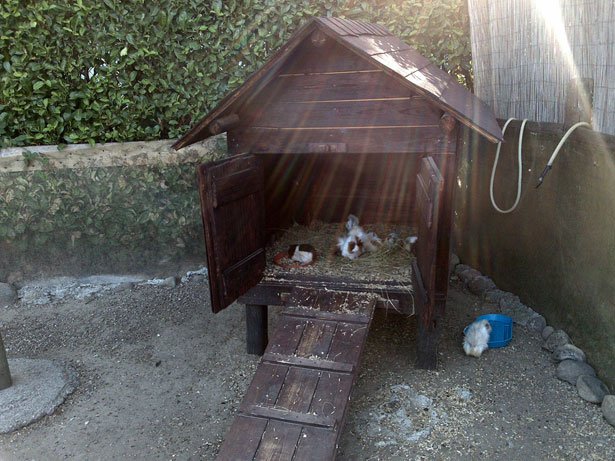
When you first get a guinea pig this question may have popped up in your mind: “Can you keep Guinea Pigs outside?” The answer to this question varies based on who you ask. But I personally do not recommended it.
While it may be common in some areas to keep guinea pigs as “outdoor pets”, the general consensus is to keep them indoors. That is because of the associated risks of keeping guinea pigs outside and while you can argue the many benefits as well, the risks associated with outdoor housing far outweigh any perceived benefits.
Guinea pigs are small animals and there is much more that needs to be considered before choosing this option. They are vulnerable. Even with the use of wooden hutches or pens, there is no complete guarantee that your guinea pig will remain safe.
It is not worth it. Not just safety-wise but also for the betterment of your pet. This guide will go through the downsides and considerations of having your guinea pigs outside and also why indoor living is the better choice for your guinea pig.
This post contains affiliate links. I may earn a commission if you make a purchase through these links at no additional cost to you.
View the Table of Contents
Table of Contents
Reason One: Guinea Pigs Are Prey Animals
Guinea pigs are prey animals. As prey animals, guinea pigs are prone to stress. They are ‘hardwired’ to feel vulnerable and stressed in open or unpredictable environments. That is why they freeze or flee when hearing a sudden sound or movement. Now imagine this outdoors. Depending on where you live, the sights, sounds and/or smells of the outdoors can be a constant stressor. Guinea pigs need to feel secure with a quiet environment and ample hiding spots to hide from perceived dangers.
Natural predators are one of the main reasons why outdoor housing is not recommended. This does not just include wild animals like coyotes or birds, but also domesticated animals like cats and dogs. Larger animals are a threat. Especially when your guinea pigs are left alone.
A fenced yard or a barrier may not always work. Even if not many animals pass through your area, predators can still be attracted to guinea pigs from the scents and sounds they make.
Perhaps most importantly, even if a predator never physically reaches your guinea pig, simply seeing or smelling one nearby with no means of escape is a significant daily stressor. Chronic stress weakens the immune system and can seriously impact your guinea pig’s quality of life.
Guinea pigs have evolved remarkable survival instincts over generations. Their large eyes provide a 340 degree field of vision and their sharp sense of smell allows them to detect predators from a distance.
It is a normal instinct of survival. When kept indoors you can confidently account for this because you control all the variables of your house for their safety but outside you cannot. There are many natural predators that may try to reach or harm them regardless of a wooden hutch. Because even under the protection of a secure cage or predator-proof design, your guinea pig can still become vulnerable to passing wildlife.
Reason Two: Weather and Temperature Risks
The ideal temperature range for guinea pigs is between 65 and 75 degrees Fahrenheit (18 °C – 24 °C). Anything below or exceeding this range can be dangerous. This is an issue especially during the winter and summer seasons. Some hutches are insulated and have hutch covers that help manage these temperatures but it does not account for unpredictable weather that causes sudden drops or rises in temperature, or conditions like heavy rain and storms.
Keeping your pet out year round exposes them to these changes. Living in ‘extreme temperature’ areas like Florida and some parts of Canada is not a viable option to have outdoor guinea pigs.
When indoors, the temperature can easily be changed and is usually stable. You can not do that outdoors.
Reason Three: Social Interaction & Health Monitoring
Guinea pigs thrive on social interaction, not just with each other but also with their owners. In general, keeping your guinea pig outdoors greatly reduces the amount of time you spend with them. When your guinea pig is inside, you naturally see and interact with them throughout the day simply by going about your routine or walking around your house. Outdoor pets require deliberate effort to visit and are easy to neglect unintentionally.
Monitoring your guinea pig’s health is also much harder outdoors. Guinea pigs are notorious for hiding signs of illness until their condition becomes serious. You would need to check your pet daily to pick up on early warning signs before they become emergencies.
Always spend at least one hour with your guinea pigs daily.
To learn more about recognizing signs of illness early, check out our Guinea Pig Health Guide here: [Sick Guinea Pig: Warning Signs & When to See a Vet].
Is Supervised Outdoor Time Safe?
Keeping guinea pigs indoors does not mean they can never enjoy the outdoors. Supervised outdoor time is perfectly safe and can be a wonderful enrichment activity for your cavy. Use a secure portable playpen or a hutch with a predator proof lid, choose a shaded area on mild weather days and always stay with them while they are outside. Never leave them unattended.
Make sure to only take your guinea pigs outside during stable weather conditions with temperatures ranging from 65° to 75°F.
What If You Still Want an Outdoor Setup?
I still strongly recommend keeping guinea pigs indoors. However if you have made the decision to keep them outside, here is what you need at minimum to keep them as safe as possible:
- A fully weatherproof and insulated hutch
- Predator proof locks and reinforced mesh
- A covered and shaded area
- A thermometer to monitor temperature daily
- A plan to bring them indoors during extreme weather
Now, even with all of these precautions, outdoor living carries inherent risks that indoor living simply does not. You could have the safest hutch imaginable and something may still go wrong. For my top cage recommendations to set up the perfect indoor home for your guinea pig check out these links: [Guinea Pig Cages: Types, Sizes & Best Options] and [How to Set Up a Guinea Pig Cage].
It is always worth the peace of mind knowing your guinea pig is safe indoors.
Outside Cages for Guinea Pigs
While I cannot recommend a permanent outdoor hutch (as I have never owned one), I can confidently recommend a portable playpen. A [Portable Outdoor Playpen] like this is great for supervised outdoor time. This is not a permanent living solution! It does not have all the essentials needed to keep your pet safe long-term. However it is perfect for short supervised sessions where your guinea pigs can enjoy fresh grass and open air safely. This playpen comes with a zippered cover and a waterproof bottom to contain mess and is easy to fold for storage and set up when needed. Remember to always stay with your guinea pigs when using a playpen.
Can You Keep Guinea Pigs Outside Year-Round?
At the end of the day guinea pigs are indoor pets. While you can keep them outside, it is important to understand all the risks associated with doing so. No hutch or outdoor setup can fully replace the safety and comfort of an indoor environment.
If you do choose to keep your guinea pig outside, please make sure their setup is as safe as possible. But if you are on the fence, keep them inside. It is simply not worth the risk when a proper indoor cage does the job so much better.
Frequently Asked Questions (FAQ)
Yes! Guinea pigs can eat grass. In fact this is one of the benefits of providing your guinea pig ‘outdoor time.’ Grass is a natural part of a guinea pig diet. Now it is important to only feed your pet fresh grass. Avoid any grass that has been touched by pesticides, chemicals or fertilizers. Do not feed them lawnmower clippings any any grass near the road as it may contain exhaust residue from passing cars. Make sure to stay with your guinea pigs while they are outside grazing.
The ideal range for guinea pigs are 65-75°F (18 – 23°C). Temperatures below 60°F are too cold and anything higher than 77°F can cause heatstroke. Guinea pigs should only be outside in mild weather and have shade or shelter.
I highly discourage this. Temperatures are way too cold for guinea pigs during this time. There is a high risk of hypothermia. If for whatever reason they cannot go indoors, move their hutch into a covered area like a garage or shed to prevent snow damage. You would need to be extra careful and monitor for any signs of cold and freezing. If the outside environment has extreme weather or temperature, please move your pets indoors.
Same thing with allowing your pets outside during winter, it is not ideal. If needed, you must position the hutch in a shaded area and not directly under the sun. Use cool mats and ice packs to manage their temperature and monitor for any signs of heatstroke. If the outside environment has extreme weather or temperature, please move your pets indoors.
It is not recommended. While some owners do keep guinea pigs outside permanently, the risks outlined here make it a less than ideal long term solution. Guinea pigs thrive best as indoor pets.